Renovating a kitchen in Cádiz costs between €5,000 and €22,000 fully fitted, depending on the size, the materials you choose, and whether you want to change the layout or keep the existing one. It is, without doubt, the renovation you will appreciate most on a daily basis and one of the best investments you can make in your home: in the province of Cádiz, a newly renovated kitchen can increase the assessed value of a property by between 8 and 15 per cent, and makes it significantly easier to sell or let.
In this guide we give you real 2026 prices broken down by finish level, square meterage and trade. We also cover the Cádiz-specific factors that many quotes never mention: coastal damp, restrictions on listed buildings in the old town, and how costs vary depending on exactly where in the province you live.
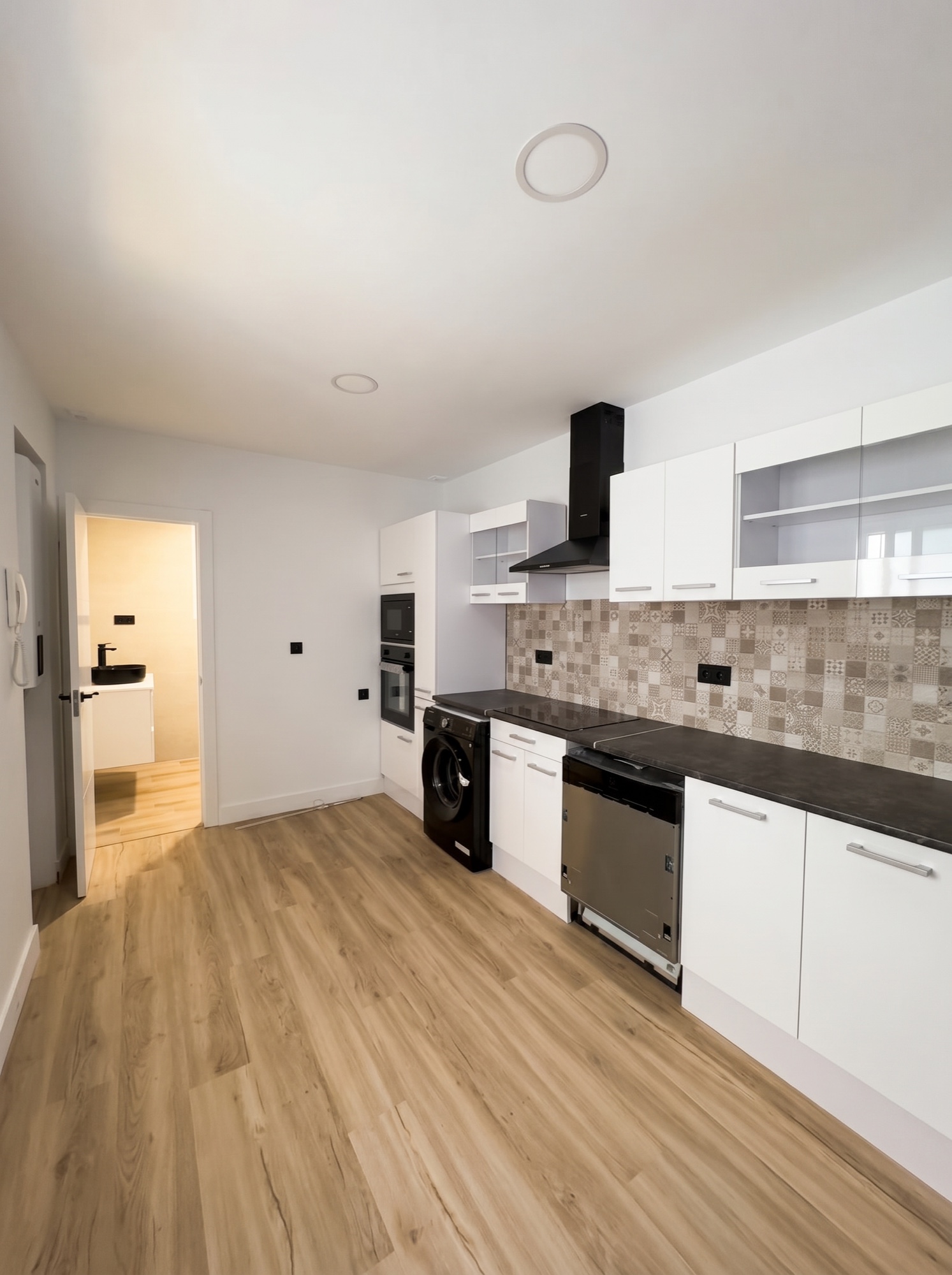
Kitchen Renovation Costs in Cádiz by Finish Level
The single biggest factor in your final budget is the level of finishes and materials. Below we set out three tiers and what each one covers. These prices are based on a mid-sized kitchen of around 10 m² and include labour, materials and waste removal.
| Tier | What's included | Guide price |
|---|---|---|
| Entry level | New laminate units, laminate or postformed worktop, standard appliances (hob, oven, extractor), no changes to services | €5,000–€7,000 |
| Mid range | Full replacement: flooring, tiling, soft-close units, quartz or Silestone worktop, mid-range appliances, under-cabinet LED lighting | €8,000–€13,000 |
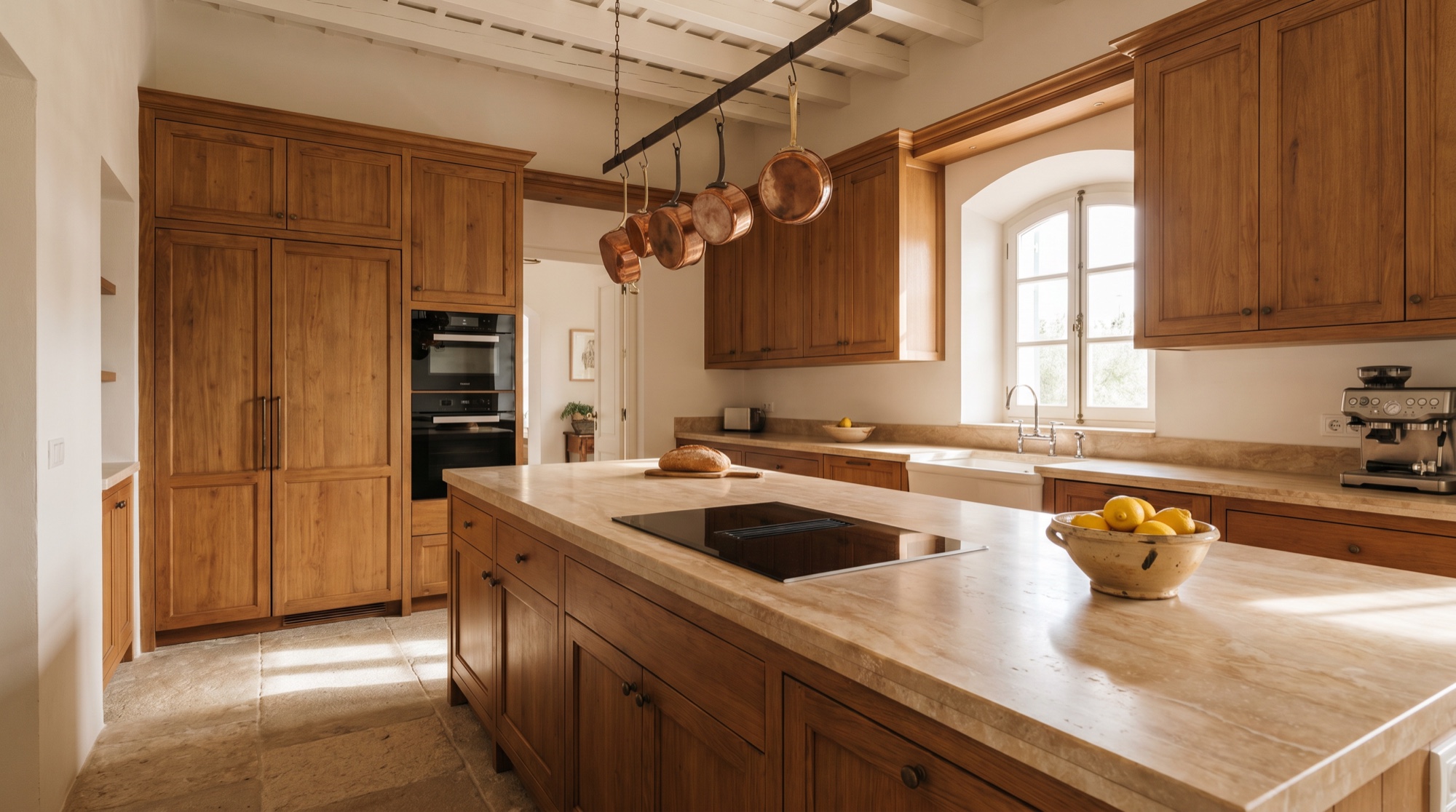
| High end | Bespoke design, premium appliances (induction hob with integrated extractor, pyrolytic oven, integrated fridge), new layout, island or peninsula, pull-out tap | €13,000–€22,000 |
The mid-range tier is the most common choice for flat renovations in Cádiz city, San Fernando and El Puerto de Santa María. If your budget is tight, a well-planned entry-level renovation completely transforms the look of a kitchen without touching the pipework or electrics, saving between €1,000 and €2,500 compared with a full gut renovation.
Kitchen Renovation Costs in Cádiz by Size
The size of the kitchen has a direct bearing on the cost of tiling, flooring, linear metres of cabinetry and the amount of material required. Kitchens in flats in the historic centre of Cádiz (El Pópulo, La Viña, Barrio de la Palma) tend to be between 6 and 8 m², while in areas such as Extramuros, Bahía Blanca, and residential developments in Chiclana and Puerto Real, kitchens of 10 to 15 m² are far more common.
| Size | Entry level | Mid range | High end |
|---|---|---|---|
| 7 m² kitchen | €5,000–€6,000 | €7,000–€9,500 | €11,000–€15,000 |
| 10 m² kitchen | €5,500–€7,000 | €8,500–€11,500 | €13,000–€18,000 |
| 12 m² kitchen | €6,000–€7,500 | €9,500–€13,000 | €14,000–€19,000 |
| 15 m² kitchen | €6,500–€8,000 | €10,500–€14,000 | €16,000–€22,000 |
In very small kitchens, under 7 m², as found in many older buildings in La Viña or El Pópulo, the cost per square metre rises slightly because the minimum labour charge stays the same regardless of size, though this is offset by lower overall material costs. If your kitchen is galley-shaped or particularly narrow, a well-thought-out L-shaped or single-wall layout can recover up to 20 per cent more usable space.
Cost Breakdown by Trade for a Kitchen Renovation in Cádiz (10 m²)
To help you compare quotes with confidence, here is a full trade-by-trade breakdown for a mid-range 10 m² kitchen. We always recommend asking for an itemised quote: it lets you see exactly what you are paying for each element and decide where to invest more and where to trim back.
| Trade | Guide cost | What's included |
|---|---|---|
| Demolition and strip-out | €400–€800 | Removal of units, existing tiles and flooring, transport to licensed waste facility |
| Building work and preparation | €800–€1,500 | Wall levelling, floor screeding, surface preparation for tiling |
| Plumbing | €500–€1,000 | Pipe replacement, new hot and cold water feeds, waste, dishwasher connection |
| Electrics | €400–€900 | New sub-board, dedicated circuit per appliance, additional lighting points |
| Tiling and flooring | €1,000–€2,000 | Wall tiles (20x60 or porcelain), porcelain or vinyl floor tiles, skirting |
| Kitchen units | €2,000–€4,000 | Wall and base units, soft-close hardware, handles, tall storage column |
| Worktop | €600–€1,800 | Laminate (€600–€800), quartz/Silestone (€1,000–€1,500), compact surface (€1,200–€1,800) |
| Appliances | €1,500–€3,000 | Hob, oven, extractor, sink and tap; dishwasher and microwave optional |
| Painting and finishing | €300–€500 | Ceiling and non-tiled wall painting, joint sealing, final snag list |
Tip: always ask for your quote to separate labour and materials within each trade. This makes it straightforward to compare two or three estimates and spot where quality differences lie, not just price.
Cádiz-Specific Factors That Affect Your Kitchen Renovation Cost
Cádiz is not like anywhere else. Its coastal location, historic architecture and particular climate have a direct bearing on the materials, timescales and cost of a kitchen renovation. These are the local factors you need to factor into your planning.
Damp and salt air are the principal enemies of kitchen finishes in Cádiz. In seafront flats or neighbourhoods such as La Viña, Santa María or El Pópulo, relative humidity exceeds 75 per cent for much of the year. This makes it essential to choose moisture-resistant materials: quartz or Silestone worktops rather than solid timber, stainless steel or aluminium handles rather than iron, and anti-damp paint on ceilings and any walls that are not tiled. The premium for these materials over standard alternatives runs to around €300–€600, but it prevents rust, swelling and mould over the medium term.
In the historic centre of Cádiz, many buildings are listed or otherwise protected. If your home is in El Pópulo, Barrio de la Palma or the area surrounding the Cathedral, you may need a minor works licence from the Ayuntamiento, which currently takes between two and four weeks to be granted and costs between €150 and €400 in fees. Older buildings also commonly have load-bearing walls that restrict layout changes, lead pipes that must be replaced by law, and consumer units that do not comply with current regulations. All of this can add between €500 and €1,500 to your budget.
In the residential zones elsewhere in the Bay of Cádiz, San Fernando, Chiclana de la Frontera, Puerto Real, El Puerto de Santa María and Jerez, properties tend to be more modern, with larger kitchens and fewer planning restrictions. Renovations here move more quickly and building and preparation costs are typically 10 to 20 per cent lower than in the old town.
Thinking about a new kitchen? At Reformas By Bianca we design and build your ideal kitchen with a fixed quote. Request your free visit.
What Pushes Up the Cost of a Kitchen Renovation in Cádiz
Certain decisions can send the budget climbing. They are not always the wrong call (some are very much worth it) but it pays to know about them upfront so there are no nasty surprises.
Moving the sink or the gas point means new plumbing or gas pipework, which easily adds €500 to €1,200. If the waste run also needs to travel more than two metres to reach the soil stack, you will need a minimum gradient that may require raising part of the floor or fitting a macerator pump, a further €200–€400.
A quartz, compact or natural stone worktop costs two to three times as much as a laminate one, but its durability and resistance to heat, stains and moisture make it the better long-term investment, especially given the Cádiz climate. A good-quality quartz worktop for a 10 m² kitchen starts at around €1,000 and can reach €1,800 with a bevelled edge and integrated upstand.
Premium appliances can easily double this line item. A pyrolytic oven costs around €600–€900, compared with €250–€400 for a standard model. An induction hob with an integrated extractor (a very popular choice in open-plan kitchens) starts at €1,200. An American-style or fully integrated fridge adds between €800 and €2,000 on top of that.
A central island is a truly transformative feature, but it requires water, waste and electrical connections running beneath the floor, plus a minimum clearance of 90 cm on each side. In kitchens of 12 m² or more it is perfectly viable; below that, a wall-mounted breakfast bar or peninsula is the more practical option.
Bespoke kitchen carpentry costs between 30 and 50 per cent more than standard modular units, but it makes use of every centimetre, something especially valuable in small or irregularly shaped kitchens like those found throughout central Cádiz. A corner unit with a pull-out carousel, a tall column with internal drawer inserts, or a cabinet built around an awkward recess can be the difference between a kitchen that works and one that constantly frustrates you.
Mistakes That Make a Kitchen Renovation More Expensive (and How to Avoid Them)
After more than a hundred kitchen renovations across the province of Cádiz, these are the mistakes we see time and again. Every single one is easily avoidable with a bit of planning before work begins.
Choosing appliances after the units have been fitted is the most costly mistake of all. If the dimensions of the oven, hob or fridge do not match the cabinet openings, pieces have to be adapted or remade, adding between €200 and €600 and several days of delay. The fix is simple: buy or reserve your appliances before ordering the units, and share the technical data sheets with your carpenter.
Not planning enough sockets is another classic. Every fixed appliance (oven, hob, dishwasher, fridge, microwave, extractor) needs its own dedicated socket with its own circuit protection. You also want at least two or three sockets along the worktop for everyday use: toaster, blender, coffee machine. Adding them during the renovation costs around €15–€25 per point; adding them afterwards, once the kitchen is installed, can cost three or four times as much.
Forgetting task lighting is a mistake that does not seem serious until you are trying to chop vegetables in shadow. An LED strip under the wall units costs between €40 and €80 fitted and completely changes how the kitchen feels to use. Add a dimmable downlight above the food preparation area and the difference is even greater. Always include this in the electrical specification, never as an afterthought.
Not treating damp before tiling. In older flats in Cádiz city, particularly ground floors or buildings with deteriorated soil stacks, it is common for kitchen walls to have penetrating or rising damp. Tiling over it without treating the cause means tiles start to lift within a year or two. A damp-proofing treatment before work begins costs between €200 and €500 and avoids having to redo the entire tiling job further down the line.
At Reformas By Bianca we provide a fixed written quote following a free site visit. We itemise units, worktop, appliances and building work so you can compare with complete clarity. Use our online calculator to get an initial figure tailored to your kitchen before the visit.
Kitchen Renovation Timescales in Cádiz
How long the work takes depends on its scope and whether a licence is required. Below are the typical timescales we work to across the province of Cádiz.
| Type of renovation | Estimated timescale | Notes |
|---|---|---|
| Unit and worktop replacement only (no building work) | 5–7 working days | No licence required. Existing services and flooring are retained |
| Mid-range renovation (units, flooring, tiling, electrics) | 2–3 weeks | May require a prior notification to the Ayuntamiento |
| Full gut renovation with layout change | 3–5 weeks | Minor works licence required. Includes plumbing, electrics, partitioning |
| Kitchens in listed buildings (historic centre) | 4–6 weeks | Longer licence timescale and possible additional heritage conditions |
You can stay in the property throughout the renovation. The most disruptive days are those given over to demolition (noise and dust) which are generally limited to one or two sessions. We provide a detailed programme before work starts so you can plan meals and daily life around the schedule. Many of our clients in San Fernando, Chiclana and El Puerto tell us it was far less disruptive than they had expected.
How We Cut Costs Without Cutting Corners in Cádiz
There are smart ways to manage the budget without ending up with a kitchen that disappoints. Here is the advice we give our clients throughout the Bay of Cádiz.
- Keeping the existing layout saves between €1,000 and €2,500 in plumbing, electrical and building costs. If the current positions of the sink, hob and fridge work well, do not move them purely for aesthetic reasons.
- Mix your tiers: invest in a quality worktop (quartz or Silestone) paired with mid-range units with good hardware. The worktop is what you see and touch every day; the interior carcasses are not.
- Choose a quality vinyl floor instead of porcelain: this cuts flooring costs by 30 to 40 per cent, installs more quickly and is warmer underfoot. Today's mid-range vinyl products are highly resistant to water and wear.
- Take advantage of appliance promotions: the major retailers refresh their ranges in September and January. Buying during those periods can save 15 to 25 per cent on what is typically the most expensive line item.
- Paint the upper section of the wall instead of tiling it: with a good washable anti-damp paint you save on both materials and labour, and the kitchen feels brighter. This is an increasingly popular approach in modern kitchen design.