Every year, thousands of homeowners in Cádiz throw themselves into a renovation full of enthusiasm but without adequate preparation. The result is all too familiar: costs that double the original budget, timelines that stretch by months, and finishes that leave you flat. The most common renovation mistakes are not inevitable, most recur simply because nobody flagged what could go wrong in time. At Reformas By Bianca, we have spent years watching these patterns play out, and we want to share what we have learned so that your renovation is a positive experience rather than a complete headache.
This guide covers the most frequent problems we see in properties across the province of Cádiz, from older flats in the historic centre of the capital to townhouses on the coast in Chiclana or El Puerto de Santa María, and offers practical advice you can act on straight away. Whether this is your first renovation or you have been through one before, you will find real-world information here to help you make better decisions.
Failing to set a realistic budget before work begins
Budget errors are, by some margin, the most common renovation mistake, and the one with the greatest consequences. Many homeowners start with a round figure they heard from a neighbour or read online, without factoring in the specific circumstances of their property. In Cádiz, a full renovation of an 80 m² flat currently runs between €35,000 and €55,000, depending on the quality of materials and the condition of the existing installations. Starting with a figure below that range almost always means cutting corners where you should not, or abandoning the project halfway through.
The mistakes that inflate a renovation most
- 1An unrealistic budgetA full 80 m² renovation in Cádiz costs €35,000-55,000; get three itemised quotes.
- 2Choosing on price aloneCheck public liability insurance, REA registration and references before signing.
- 3Skipping the permitsUnlicensed work: fines from €600 to over €6,000 and possible stoppage.
- 4Changing your mind mid-buildA layout change once work is under way adds 15-30% to the total.
- 5Getting the trade sequence wrongDisrupting the logical sequence causes delays, overruns and quality issues.
- 6No contingency bufferSet aside 10-15%; in pre-1970 homes surprises are almost guaranteed.
A realistic budget is not simply a list of line items: it also covers professional fees (an architect or quantity surveyor if the project requires one), council permit fees, which in Cádiz town hall typically run between 3% and 4% of the material execution budget, and a contingency allowance that we will discuss further on. Before signing anything, request at least three detailed quotes and compare them line by line, not just on the total. A quote that simply says "full bathroom renovation: €6,000" with no breakdown of materials, labour, and timescales is a red flag.
| Type of renovation (80 m² flat) | Indicative range in Cádiz | Typical duration |
|---|---|---|
| Partial renovation (bathroom + kitchen) | €12,000 – €22,000 | 3 – 5 weeks |
| Standard full renovation | €35,000 – €55,000 | 8 – 12 weeks |
| Full renovation with premium materials | €55,000 – €80,000 | 10 – 16 weeks |
| Commercial premises renovation (100 m²) | €40,000 – €70,000 | 6 – 10 weeks |
As you can see, the gap between a standard renovation and one with premium materials can exceed €20,000. Being clear from the outset about the level of finish you want will spare you a poorly planned project and unpleasant surprises once work is under way. Our advice: establish your priorities first (is the kitchen more important, or the flooring?) and direct the bulk of the budget towards what will have the greatest impact on your daily life.
Choosing a renovation company on price alone without considering guarantees
When comparing quotes, it is tempting to go with the cheapest. But hiring a renovation company without making mistakes means looking beyond the final figure. A difference of €3,000 or €4,000 between two quotes might mean that one includes recognised-brand materials while the other uses generic alternatives, or that one comes with a two-year guarantee while the other offers none at all. In the worst cases, the lower quote conceals vague line items that later get charged as "extras" during the build.
In Cádiz we have seen homeowners hire renovation firms with no public liability insurance and no registration with the Junta de Andalucía's register of construction companies. When problems arose, a leak after replumbing, a crack caused by a poorly executed demolition, there was nobody to hold accountable. Before signing, confirm that the company has an active tax identification number, valid insurance, verifiable references, and ideally membership of a trade body or professional association. Asking to see photos of previously completed projects and speaking with past clients are simple steps that will save you considerable grief.
- Always ask for the policy number of the public liability insurance and verify it is current.
- Check whether the company is registered on the Registro de Empresas Acreditadas (REA) held by the Ministry of Labour.
- Request at least two references for projects completed within the past 12 months.
- Be wary of quotes that do not break down materials, labour, and timescales separately.
- Pay attention to communication: a company that takes weeks to respond before the project starts will not improve once work has begun.
Not obtaining planning permission or building licences when they are required
One of the flat renovation mistakes with the most serious legal consequences is starting work without the relevant licence. In Cádiz city, any renovation that alters the internal layout, affects structural elements, or changes the facade requires a major works licence (licencia de obra mayor), processed through the Municipal Urban Planning Office. Minor works, such as retiling a bathroom or replacing windows without altering the openings, typically require a declaración responsable, which is quicker but equally obligatory.
Skipping this step can prove very costly. Fines for unlicensed works in Andalusia range from €600 to over €6,000 in serious cases, and the council can order the work to stop or even be demolished. Furthermore, if you sell the property in the future, any unlicensed renovation will appear as an irregularity and can block the transaction. Processing a declaración responsable in Cádiz takes around 15 working days; a major works licence takes between one and three months. Factor this into your planning from the very start so it does not delay the beginning of work.
Practical tip: before commissioning any renovation, check with your contractor or an architect whether you need a major works licence, a declaración responsable, or a comunicación previa. At Reformas By Bianca, we provide free advice on which process your project requires and help you with the paperwork. Two weeks spent on admin is far better than risking a fine running into thousands of euros.
Changing your mind mid-project: the mistake that inflates costs most
The walls are down, the new plumbing is in, and suddenly you decide you would prefer the kitchen at the other end of the flat. This scenario, which might sound far-fetched, happens more often than you would imagine. Every change mid-build means undoing work that has already been done, buying additional materials, and frequently holding up the trades who were due on site next. In our experience, a significant layout change halfway through a renovation can add between 15% and 30% to the total project cost.
The key to avoiding this is to invest the necessary time in the design phase before a single worker sets foot on site. Going over the plans carefully, visualising the spaces with 3D renders where possible, and visiting showrooms before choosing materials are steps that cost very little compared with the expense of making changes afterwards. If a new idea crops up during the build, discuss it with your renovation company before giving the go-ahead: ask for a quote for the change, an estimated additional timeline, and the knock-on effect on the overall schedule. That way you make the decision based on information, not impulse.
Minor changes, swapping a tap model, choosing a slightly different paint shade, are perfectly normal and barely affect the budget. The problem lies with structural or installation changes that require redoing work that was already complete. Be clear about what not to change in a renovation, and pay particular attention to this point: the more you decide before work starts, the less you will be improvising as it progresses.
Want to avoid renovation mistakes? Trust experienced professionals. Request a no-obligation quote.
Getting the order of trades and project phases wrong
A renovation is not a to-do list where tasks can be done in any order. There is a logical sequence (the correct phases of a renovation) and disrupting it causes delays, cost overruns, and quality issues. For example, laying the floor before the plumbing is finished means lifting it again if there is a leak; painting before the joinery is fitted means walls getting marked and having to be touched up. A good renovation company coordinates the trades so that each one arrives on site at exactly the right moment.
- Phase 1, Strip-out and demolition: removal of existing elements, rubble clearance, and initial clean-up.
- Phase 2, Brickwork and structure: building new partition walls, structural reinforcements where required, chasing for services.
- Phase 3, Installations: plumbing, electrics, data and telecoms, air conditioning. Everything that is concealed within the structure.
- Phase 4, External envelope: windows, external doors, insulation. Securing the interior before finishes begin.
- Phase 5, Wall and floor finishes: tiling, floor laying, suspended ceilings. Work progresses from top to bottom.
- Phase 6, Internal joinery: doors, fitted wardrobes, architraves.
- Phase 7, Painting and final finishes: final coat of paint, fitting of electrical fittings, sanitaryware, and taps.
- Phase 8, Final clean and handover: snagging, installation tests, and documented handover.
Sticking to this sequence not only prevents errors, it also optimises the overall timeline. No trade need wait for another if the sequence has been properly planned. In full flat renovations in Cádiz, where many properties are over 40 years old and the original installations are obsolete, following the correct renovation phases is especially important, because hidden problems tend to surface (lead pipes, aluminium wiring, rising damp) and these need to be tackled at the right stage so they do not compromise the rest of the project.
Failing to budget for contingencies: why every renovation needs a financial buffer
No matter how well you plan, every renovation throws up surprises. When you lift a floor, you discover a damaged waste pipe; when you remove a suspended ceiling, you find beetle damage in a joist; the residents' association requires soundproofing measures nobody had anticipated. The most frustrating renovation problems are not those caused by someone's error but those that nobody could have foreseen yet should have been covered financially. In older properties in the historic centre of Cádiz (many built before 1970) the likelihood of encountering unexpected issues is particularly high.
The general rule we apply at Reformas By Bianca is to set aside between 10% and 15% of the total budget as a contingency. On a budget of €45,000, that means reserving between €4,500 and €6,750. If it turns out not to be needed, that money is free to spend on a materials upgrade, or simply stays in your pocket. But if a serious problem arises and you have no buffer, the alternative is usually to halt work (with all the costs that entails) or accept compromise solutions that affect the quality of the finished result.
A sensible way to manage contingencies is to include a clause in the contract requiring the company to notify you in writing of any additional cost before carrying out the work, with a detailed quote and your express approval. That keeps you in control of expenditure and lets you decide how to handle each situation without being pressured. It is one of the most effective ways to stay ahead of problems before they become serious ones.
Overlooking thermal and acoustic insulation when renovating in Cádiz
Cádiz has a distinctive climate: hot summers with temperatures regularly exceeding 35 °C, mild but humid winters, and a levante wind that puts any external envelope to the test. Many properties in the province have aluminium-framed windows with no thermal break and facades with no insulation whatsoever, resulting in high energy bills and condensation problems. Using a renovation as an opportunity to improve thermal performance is one of the best-value investments you can make: reducing energy demand by 30% to 50% is entirely achievable with the solutions available today.
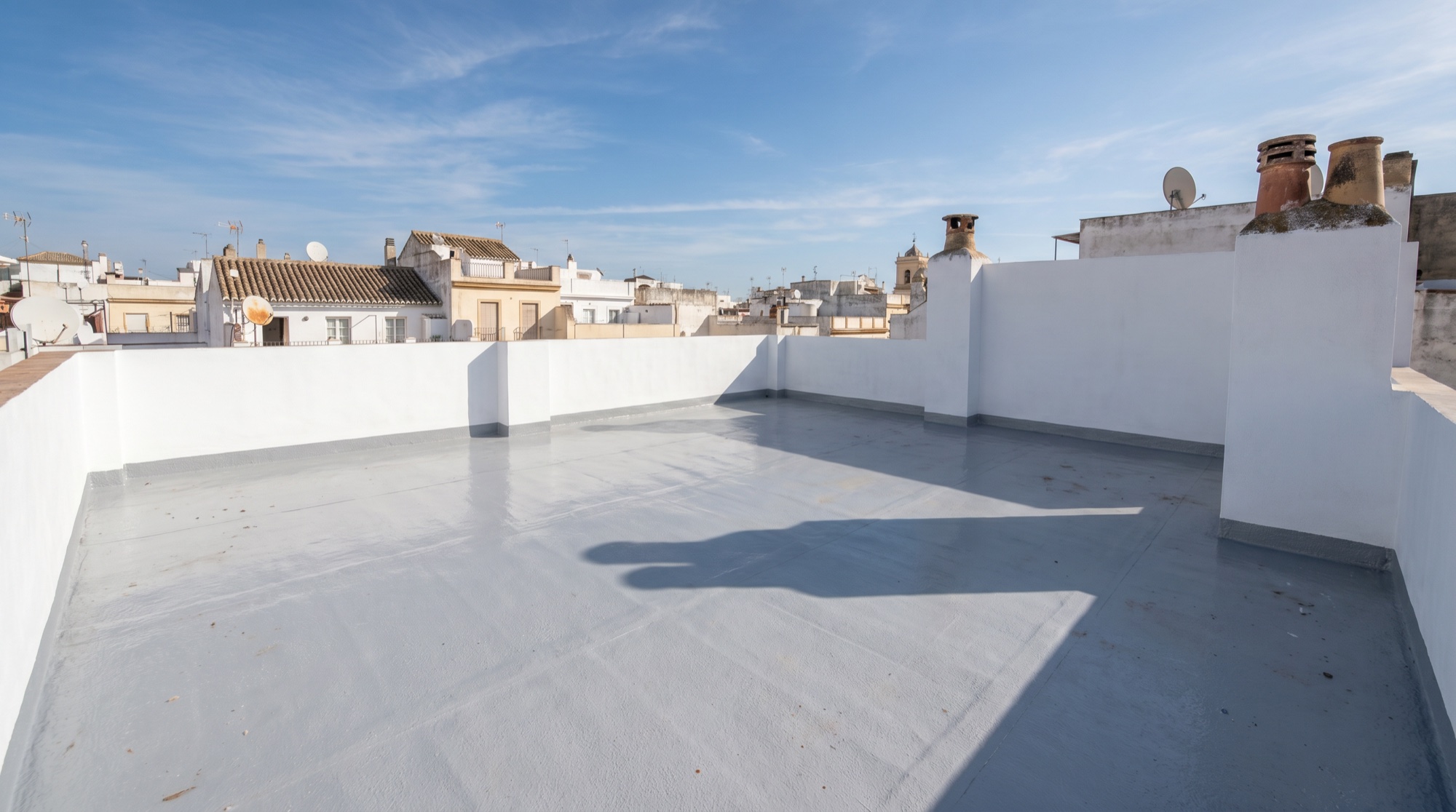
Acoustic insulation is something many homeowners overlook until it is too late. Replacing windows with PVC or thermally broken aluminium frames with double glazing (indicative installed cost: €350 – €600 per standard window) improves both thermal and acoustic performance in one go. On party walls and floors, adding a layer of mineral wool or extruded polystyrene during the brickwork phase carries a marginal cost compared with doing it later once all the finishes are in place. Among the most common renovation mistakes in Cádiz, neglecting insulation is the one people regret most in the long run.
| Insulation solution | Indicative cost (€/m²) | Estimated energy saving |
|---|---|---|
| Blown cellulose into cavity wall | €15 – €25/m² | 20% – 35% |
| Internal lining with mineral wool + plasterboard | €30 – €45/m² | 30% – 45% |
| ETICS (external wall insulation system) | €50 – €80/m² | 40% – 55% |
| PVC/thermally broken aluminium windows + double glazing | €350 – €600/unit | 15% – 25% (windows only) |
Signing contracts without specifying materials, timescales, or guarantees
The last of the common renovation mistakes (though no less important for that) is signing a vague contract or, worse still, not signing one at all. A renovation contract should be a detailed document that protects both parties. It must include: a precise description of the works with measurements, the brand and model of the principal materials, an execution schedule with start and end dates, a payment structure tied to project milestones, and a warranty period with clear terms. Without these elements, any disagreement becomes a problem with no straightforward resolution.
The payment structure is particularly important. Industry standard is a deposit of 20% – 30% at the outset, staged payments tied to progress (for example, on completion of strip-out, on completion of installations, on completion of finishes), and a final payment of 10% – 15% on definitive handover once everything has been checked and signed off. Never pay more than 30% upfront, and never pay 100% before the project is complete and inspected. A well-drafted contract is your best tool for hiring a renovation company without problems.
- Insist that the contract specifies exact brands and models of materials (for example: "Keraben Mixit 60×60 rectified porcelain tile"not "similar tile").
- Include a works schedule with dates and penalties for unjustified delays (typically 0.5% – 1% of the total per week of delay).
- Define the warranty period in writing: a minimum of one year for finishes and three years for installations.
- Establish a written procedure for approving changes and additional costs, in writing and with your signature before work proceeds.
- Ensure the contract includes an obligation to hand over installation certificates (electrical certification, plumbing certificate) on completion.
At Reformas By Bianca we work with transparent contracts that itemise every element, and we hand over a completion dossier containing all certificates, updated drawings, and written guarantees. We believe trust is built through clarity, not verbal promises. If you are thinking of renovating your home in Cádiz and want to get it right from day one, we would be delighted to advise you with no obligation whatsoever.