Home renovation grants in 2026: what's available and where to apply
In 2026, several funding routes exist for renovating your home, and most of them are tied to improving energy efficiency. European Next Generation funds remain active through the Junta de Andalucía's Plan Eco Vivienda, income tax deductions have been extended until December 2026, and the new National Housing Plan 2026–2030 opens specific lines for vacant properties intended for the rental market. Whether you are thinking of renovating a flat in El Pópulo, a house in La Viña, a semi-detached in San Fernando, or a property in Chiclana, it is well worth understanding every available scheme before you sign off on a quote.
How to apply for the grants, step by step
- 1Initial energy certificateA technician issues and registers it with the Junta. Cost: €80-150.
- 2Get detailed quotesThey must itemise the energy-efficiency works that justify the grant.
- 3Submit the applicationVia the Junta or council portal, with a digital certificate or Cl@ve.
- 4Carry out works, keep invoicesRegistered company; pay by transfer or card, never cash.
- 5Post-works energy certificateMust prove the minimum improvement required (7% or 30% by scheme).
- 6Submit proof and claim the deductionProvide invoices and certificates; claim the deduction on your tax return.
This guide gives you the full picture: which funding lines are currently open, how much money you can recover, what the requirements are, and where to apply. We also explain how to stack several schemes on a single project without missing out on any of them, something many homeowners are unaware of, and which can mean a saving of several thousand euros.
Overview of home renovation grants available in 2026
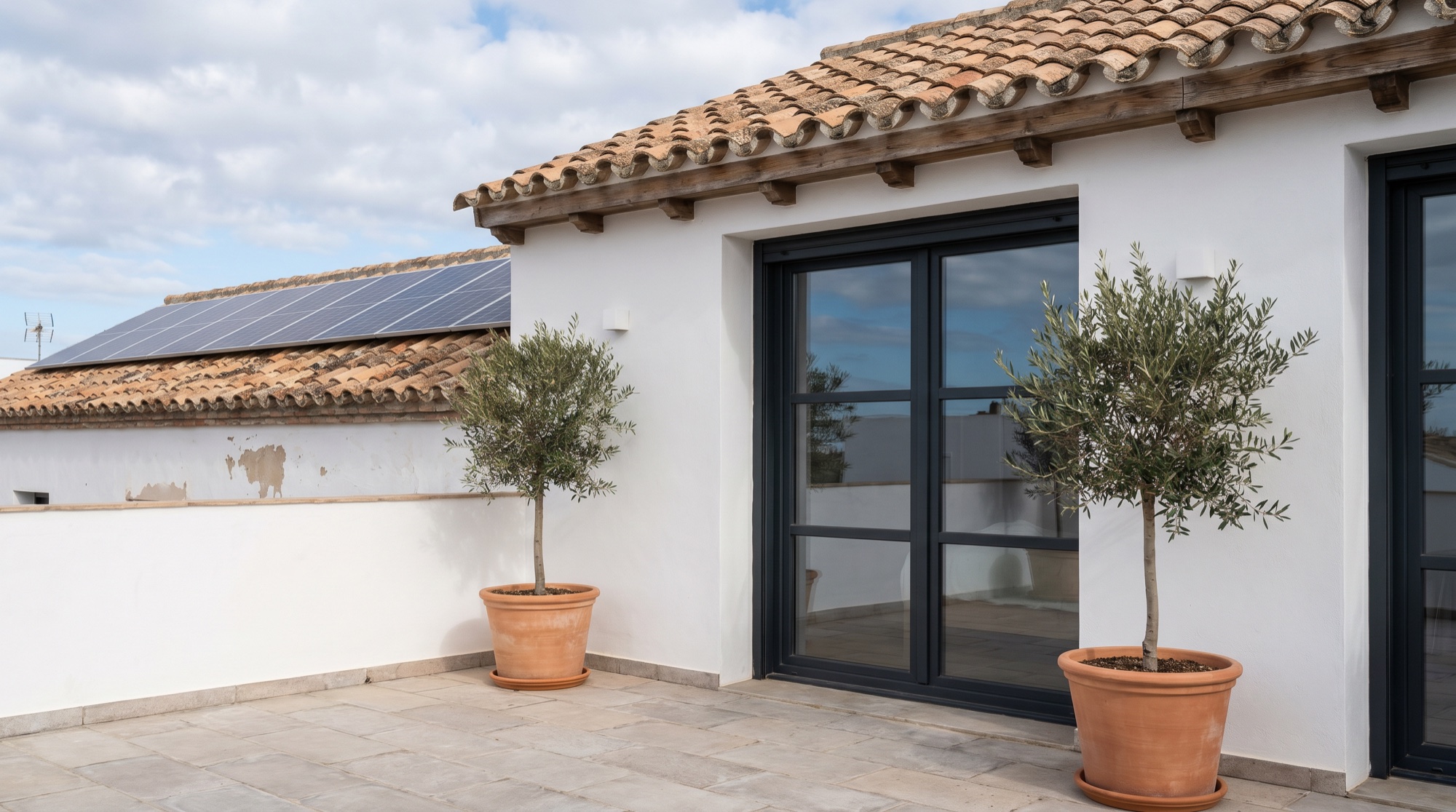
Before diving into the detail, it helps to see the full landscape. There are four main funding routes that a property owner in Cádiz can explore in 2026. Not all of them are fully compatible with each other, but many can be combined provided each one finances a different element of the project. The table below summarises the main schemes with indicative amounts and the body responsible for each.
| Funding scheme | Indicative amount | Administered by | Where to apply |
|---|---|---|---|
| Plan Eco Vivienda (Next Generation EU) | 40–80% of cost, max. €18,800/dwelling | Junta de Andalucía | Junta de Andalucía online portal |
| National Housing Plan 2026–2030 (vacant property) | Up to €30,000 (€35,000 in rural areas) | Spanish Government / Junta de Andalucía | Pending regional call for applications |
| 20% income tax deduction | Up to €5,000/year deductible base | Agencia Tributaria | Annual tax return |
| 40% income tax deduction | Up to €7,500/year deductible base | Agencia Tributaria | Annual tax return |
| 60% income tax deduction | Up to €15,000/year deductible base | Agencia Tributaria | Annual tax return |
| Municipal grants (Cádiz city) | Varies by call | Ayuntamiento de Cádiz | Ayuntamiento de Cádiz online portal |
Energy renovation with European funds: Plan Eco Vivienda in Andalusia
This is the most generous scheme and the one that can cover the highest amount. The Next Generation EU funds, channelled in Andalusia through the Plan Eco Vivienda administered by the Consejería de Fomento, Articulación del Territorio y Vivienda, subsidise between 40% and 80% of renovation costs provided the works improve the energy rating of the building or dwelling. The scheme's total budget stands at €614 million across Andalusia, distributed across several funding lines.
The lines most relevant to individual property owners in Cádiz are Line 3 (building-level renovation, with a maximum of €18,800 per dwelling) and Line 4 (energy efficiency improvements in individual homes, covering up to 40% of the cost and capped at €3,000). There is also Line 5, which funds the preparation of the building log book (€700 plus €60 per dwelling) and the drafting of technical renovation project documents (up to €800 per dwelling).
Eligibility requirements for Plan Eco Vivienda grants
For your renovation in Cádiz, San Fernando, Chiclana, Puerto Real, El Puerto de Santa María, or Jerez to qualify, you must meet several requirements. The first and most important is achieving a minimum energy saving of 30% compared with the pre-works situation, verified by an energy efficiency certificate issued by a qualified technician both before and after the renovation. Without those two certificates, the grant does not apply.
- Minimum 30% energy saving demonstrated by an energy certificate issued before and after the works.
- Minimum project cost exceeding €1,000.
- Household income below 5.5 times the IPREM (approximately €49,600 per year in 2026).
- No grant received for the same property in the preceding 3 years.
- Works must be carried out by a registered company with an official invoice, cash payments without documentation are not accepted.
- Works must be completed before the deadline set by each call for applications (check current dates on the Junta de Andalucía website).
Works eligible for energy renovation subsidies
Not every type of renovation qualifies for these grants. Eligible works are those that produce a measurable reduction in energy consumption. In practice, the most common ones in Cádiz properties, particularly in older neighbourhoods such as El Pópulo, La Viña, Extramuros, or the Barrio de la Palma, are the following.
- Replacement of windows and frames with thermal-break models fitted with low-emissivity glass.
- External wall insulation using an ETICS system (External Thermal Insulation Composite System).
- Roof and terrace insulation, particularly important for top-floor flats in older buildings.
- Installation of an air-source heat pump for heating, cooling, and hot water.
- Integration of renewable energy: photovoltaic or solar thermal panels.
- Upgrade of existing heating and cooling systems to high-efficiency alternatives.
Practical example: replacing the windows in an 80 m² flat in Cádiz can cost between €4,000 and €8,000 depending on the material and the number of openings. Under Line 4 of Plan Eco Vivienda you can recover up to €3,000, and if you also apply the 20% income tax deduction on the non-subsidised portion, your total saving can exceed €4,000.
Grants for vacant properties intended for affordable rental
The new National Housing Plan 2026–2030, approved by the Spanish Government, includes a dedicated line for renovating properties that have been vacant for more than two years and putting them on the market as affordable residential lets. The grant can reach €30,000 per dwelling, and up to €35,000 if the property is located in a demographically challenged or rural area.
This line is particularly attractive for investors with unrenovated flats in Cádiz, where rental demand is high and supply is tight. A vacant flat in the historic centre or in areas such as Extramuros or Bahía Blanca that needs a full renovation can deliver a significantly better return if this grant is used. For example, if you renovate a 70 m² flat at a cost of €50,000–€70,000 and receive a €30,000 subsidy, your net investment falls to €20,000–€40,000, which dramatically improves the return.
Eligibility requirements for the vacant property rental grant
- The property must have been unoccupied for a minimum of 2 years, evidenced by water and electricity consumption records or in accordance with regional regulations.
- Following renovation, it must be let as affordable residential accommodation for at least 5 years.
- Both private individuals and corporate owners may apply.
- The scheme is administered and called by the Junta de Andalucía (specific regional call pending).
- The rental price must comply with the limits set by the regional call for applications.
For investors: a 70 m² flat in the old town of Cádiz can be let for €650–€900 per month. If a full renovation costs around €60,000 and you receive a €30,000 grant, your net investment is €30,000. With a net rental income of €600 per month, you recoup the investment in just over four years. Without the grant, that timeline doubles.
Want to make the most of available grants for your renovation? At Reformas By Bianca we help you plan the work to meet the requirements and provide all the documentation you need.
Income tax deductions for energy efficiency in 2026
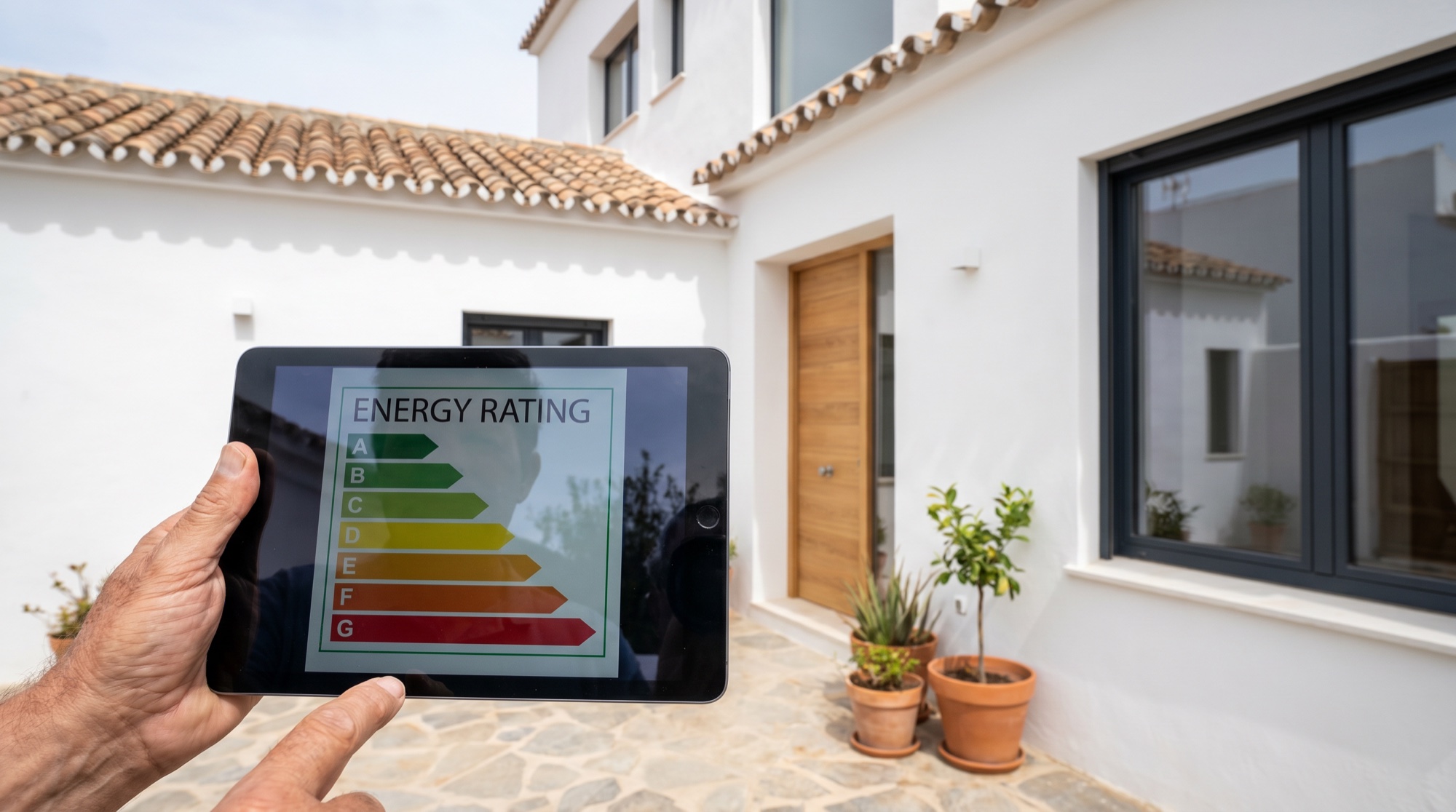
The Government extended the income tax deductions for energy efficiency improvement works in December 2024, keeping them in place until 31 December 2026. This means any works you carry out and pay for during 2026 can benefit from these deductions on the following year's tax return. There are three tiers, each requiring a different level of energy improvement.
| Deduction type | Percentage | Maximum annual base | Maximum tax saving | Improvement required |
|---|---|---|---|---|
| Reduction in heating/cooling demand | 20% | €5,000 | €1,000/year | Reduce demand by at least 7% |
| Reduction in non-renewable primary energy consumption | 40% | €7,500 | €3,000/year | Reduce consumption by at least 30% or achieve rating A or B |
| Energy renovation of a residential building | 60% | €15,000/year (max. accumulated €15,000) | €9,000 accumulated | 30% reduction in non-renewable primary energy consumption for the entire building |
In practice, the works most likely to clear the 7% threshold for the 20% deduction are window replacement and thermal insulation improvements. To access the 40% tier, you need more substantial works: installing a heat pump, replacing an old boiler with a condensing model, or combining several improvements to the building envelope. The 60% deduction is reserved for works affecting the entire building, such as full-facade ETICS insulation or a comprehensive overhaul of the building's thermal systems.
To claim any of these deductions you need two key documents: an energy efficiency certificate issued before works begin, and a post-works certificate demonstrating the improvement achieved. Both are issued by a qualified technician (architect or engineer) and must be registered with the relevant Junta de Andalucía body. Each certificate typically costs between €80 and €150 for a standard flat.
How to stack grants and tax deductions on the same renovation
One of the most common questions is whether multiple funding schemes can be combined on a single project. The short answer is yes, as long as the same expenditure is not funded twice. Plan Eco Vivienda grants are compatible with income tax deductions, but the deductible base is calculated after subtracting any subsidy received. In other words, if your project costs €10,000 and you receive a €3,000 grant from the Junta, the base on which you calculate your income tax deduction is €7,000.
What you cannot do is apply two different income tax deduction tiers (the 20% and the 40%, for example) to the same amounts. They are mutually exclusive with respect to the same works. Choose whichever tier suits you best based on the level of energy improvement you achieve. It is also worth knowing that Energy Saving Certificates (CAE) are compatible with both grants and deductions, which adds a third avenue of saving for larger-scale projects.
Worked example of stacking schemes: energy renovation of a flat in San Fernando costing €15,000. You receive €3,000 from Line 4 of Plan Eco Vivienda. That leaves €12,000 of your own expenditure, on which you apply the 40% income tax deduction (assuming you reach the required improvement threshold): a tax saving of €4,800, within the €7,500 deductible base cap. Total saving: €7,800 on a €15,000 project, equivalent to 52% of the total cost.
Ayuntamiento de Cádiz grants for residential renovation
Alongside the regional and national schemes, the Ayuntamiento de Cádiz runs residential renovation programmes under the Recovery, Transformation and Resilience Plan. These programmes focus on the renovation of buildings in the historic quarter (neighbourhoods such as El Pópulo, La Viña, and Santa María), improving accessibility and energy efficiency in homes, and the restoration of facades on listed or protected buildings.
Municipal calls for applications are published periodically on the Ayuntamiento de Cádiz online portal (institucional.cadiz.es). Amounts and deadlines vary from one edition to the next, but they typically cover between 25% and 50% of the works cost. For properties in the old town, where many buildings carry heritage protection that pushes up renovation costs, these grants can be the supplement that makes a project financially viable.
If your property is in a nearby municipality such as Puerto Real, Chiclana de la Frontera, El Puerto de Santa María, or Jerez de la Frontera, check the online portal of your local council as well. Several municipalities in the province run their own renovation schemes or are signed up to Plan Eco Vivienda and can assist with applications through their planning and urban development offices.
Renovation costs and potential savings with available grants
To put the grant figures in context, it helps to know what renovation work costs in the province of Cádiz in 2026. Prices vary depending on the scope of the project, the condition of the property, and the quality of materials, but the following are the typical ranges per square metre.
| Type of renovation | Price per m² | Example for 80 m² | Estimated duration |
|---|---|---|---|
| Partial renovation (painting, flooring, one bathroom) | €450–€650/m² | €36,000–€52,000 | 4–6 weeks |
| Mid-range renovation (kitchen, bathrooms, services) | €700–€950/m² | €56,000–€76,000 | 8–12 weeks |
| Full renovation with complete reconfiguration | €950–€1,350/m² | €76,000–€108,000 | 12–16 weeks |
If your renovation includes energy efficiency improvements, such as window replacement, thermal insulation, or a heat pump installation, you can recover between €3,000 and €18,800 in direct grants plus between €1,000 and €9,000 in income tax deductions. On a mid-range renovation of €70,000 with an energy component, the combined saving can be in the region of €5,000 to €12,000, representing an effective discount of 7% to 17% on the total budget.
How to apply for the grants: a step-by-step guide
The process varies depending on the funding line, but in every case it is worth following a logical sequence to avoid losing a grant through an administrative error. Below are the general steps that apply to most calls for applications in Andalusia.
- Step 1: Obtain an energy efficiency certificate for your property in its current state. A qualified technician must issue it and register it with the Junta de Andalucía. Indicative cost: €80–€150.
- Step 2: Request detailed quotes from renovation companies. The quote must break down the items that improve energy efficiency (windows, insulation, heat pump) as these are what justify the grant.
- Step 3: Submit your application through the relevant online portal, the Junta de Andalucía portal for Plan Eco Vivienda, the council portal for local grants. You will need a digital certificate or Cl@ve credentials.
- Step 4: Wait for the decision. Timescales vary but are typically 3 to 6 months from the date of application. Under some lines you may start works before receiving a decision, but you do so at your own risk.
- Step 5: Carry out the works with a registered company and keep all invoices. Payments must be made by bank transfer or card, cash is not accepted.
- Step 6: Obtain the post-works energy certificate, which must demonstrate the minimum improvement required (7% or 30% depending on the grant).
- Step 7: Submit the supporting documentation (invoices, certificates, photographs) within the deadline set by the grant decision.
- Step 8: For income tax deductions, include the relevant figures in your tax return for the year in which you paid for the works.
Key deadlines and dates in 2026
The Next Generation funds are in their final phase of execution. Several Plan Eco Vivienda lines have works completion deadlines falling during 2026. The Junta de Andalucía recently extended the execution deadline for Line 3 by resolution in May 2026, but it is advisable not to delay applications. The income tax deductions apply to works paid for up to 31 December 2026, and the new National Housing Plan 2026–2030 calls depend on the Junta de Andalucía publishing its regional call for applications.
Important: amounts, requirements, and deadlines change with each call for applications. Always verify the current terms on official sources before counting on a grant. Check the Junta de Andalucía online portal (juntadeandalucia.es), the Ministry of Housing and Urban Agenda (mivau.gob.es), and the Agencia Tributaria (sede.agenciatributaria.gob.es) for up-to-date information.
How Reformas By Bianca can help you
Many grants require works to be carried out by a company that issues a proper invoice, and energy improvements to be evidenced with technical documentation. At Reformas By Bianca we have spent years delivering renovation projects in Cádiz, San Fernando, Chiclana, Puerto Real, El Puerto de Santa María, and Jerez, and we know exactly what each call for applications requires. We help you plan your renovation so that it meets the grant conditions, and we provide all the documentation you need: a quote broken down by line item, detailed invoices, materials certificates, and a technical report of the works carried out.
If you are not sure where to start, we suggest using our renovation cost calculator to get a rough idea of the budget, then getting in touch so we can assess which grants you may be able to apply for based on your specific project. There is no charge for this initial assessment, and we will point you towards the open calls in your area.