Melamine or Lacquered: Which to Choose for Your Wardrobes and Furniture in Cádiz
When you're planning a renovation in Cádiz and the moment comes to choose the finishes for your wardrobes and furniture, the same question always comes up: melamine or lacquer. It's not a minor decision, because it affects your budget, the look of your home, and how those pieces will age over the years. In our joinery workshop we work with both materials every day, and we know that the right choice depends on specific factors: the room in question, how it will be used, your budget, and the local climate. In this guide we explain everything you need to make an informed decision, no waffle, no unnecessary jargon.
What melamine and lacquer actually are: the differences from the ground up
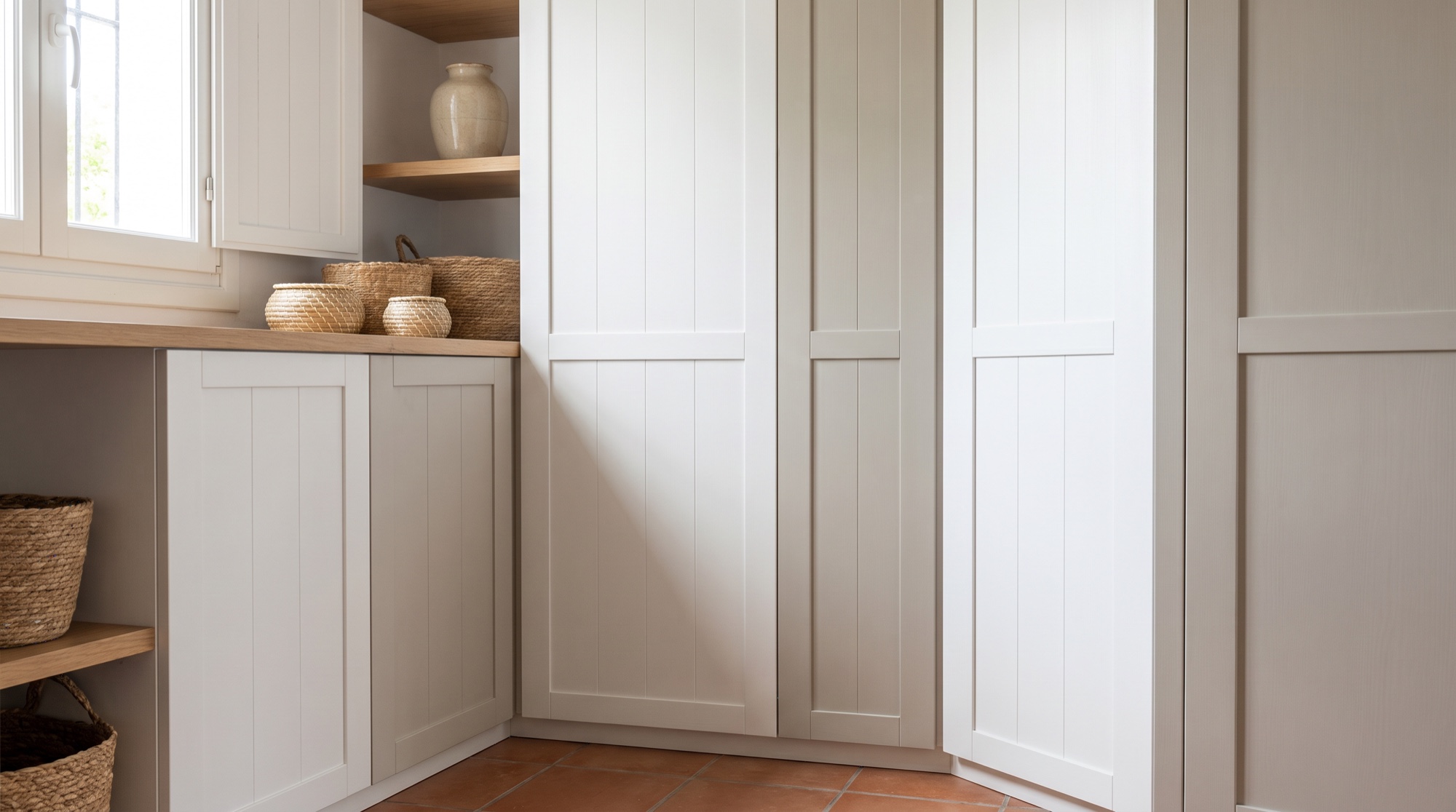
Melamine is a chipboard or MDF panel coated with a decorative layer of melamine resin, a synthetic material bonded to the board under heat and pressure. The result is a smooth, consistent surface available in hundreds of colours and textures that mimic wood, stone or plain finishes. Melamine wardrobes in Cádiz are, by some margin, the most popular choice in residential renovations, thanks to their excellent value for money.
Lacquer, on the other hand, starts with a medium-density MDF panel to which several coats of paint and lacquer (typically polyurethane) are applied, with intermediate sanding stages and controlled drying between each. This craft process can require anywhere between four and six coats to achieve a consistent, durable finish. The result is a completely smooth surface with no visible grain, a depth of colour and a tactile quality that melamine simply cannot replicate. When we talk about lacquered furniture in Cádiz, we're referring to joinery work that demands experience and controlled workshop conditions.
The fundamental difference between melamine and lacquer comes down to the manufacturing process. Melamine is an industrially finished product that arrives ready to fit, whereas lacquer is a finishing process applied piece by piece. This explains the differences in price, lead time and end result that we'll cover throughout this guide.
Melamine vs. lacquer at a glance
Melamine
- More affordable price
- Better scratch resistance
- Ready in 2-3 weeks
- Wipes clean with a damp cloth
Lacquer
- Costs 70-100% more
- Seals edges against moisture
- 4-6 week lead time
- Any RAL/NCS colour
Durability compared: which holds up better against humidity and daily use in Cádiz
Cádiz has a particular climate that directly affects interior materials: average relative humidity sits at around 70–75% for much of the year, and in coastal areas such as the Casco Antiguo, Cortadura or Valdelagrana it can exceed 80%. That's not a trivial detail when choosing between melamine and lacquer for your wardrobes, because both materials respond differently to sustained moisture.
Good-quality modern melamine handles surface moisture well: splashes, occasional condensation and cleaning with a damp cloth cause no damage. Its weak point, however, is the edges and joins. If water gets in through a poorly sealed edge or an unprotected cut, the core board absorbs moisture and swells irreversibly. That's why we always insist on using moisture-resistant boards (green on the inside) and 2 mm ABS edge banding on all pieces exposed to damp areas such as kitchens and bathrooms.
Lacquer provides a more complete barrier against moisture, as the lacquer seals the entire surface of the board, edges included. A properly lacquered wardrobe has no exposed joints where water can seep in. This makes it the superior option for rooms such as bathrooms, kitchens, or properties on the seafront in Cádiz, where salt-laden humidity is constant. In terms of scratch resistance, melamine holds up better under heavy daily use, while lacquer (particularly in a gloss finish) tends to show signs of wear more readily over time.
Practical tip: if your property is in a coastal area of Cádiz (Casco Antiguo, Santa María del Mar, La Caleta, Sancti Petri), always specify moisture-resistant board for melamine, or a lacquered finish with a damp-proof primer. This precaution adds between €40 and €80 to the total cost of the piece, but it prevents the swelling problems that appear within 2–3 years on standard boards.
Price differences between melamine and lacquer for bespoke wardrobes and furniture
Price is the factor that carries most weight in the melamine vs lacquer decision, and the difference is significant. To give you a realistic point of reference, below are the price ranges we work with in our joinery for bespoke wardrobes in Cádiz, updated to 2025. Prices include design, manufacture, delivery and installation within the province of Cádiz.
| Item | Melamine | Lacquer |
|---|---|---|
| Built-in wardrobe 250 cm (2 sliding doors) | €850 – €1,200 | €1,600 – €2,400 |
| Built-in wardrobe 300 cm (3 hinged doors) | €1,100 – €1,500 | €2,000 – €3,000 |
| Tall kitchen unit (per linear metre) | €280 – €400 | €520 – €750 |
| Base kitchen unit (per linear metre) | €320 – €480 | €600 – €900 |
| Full dressing room (6–8 m²) | €2,500 – €4,000 | €4,500 – €7,500 |
| Manufacturing lead time | 10–15 working days | 20–30 working days |
| Gloss vs matt finish surcharge | Not applicable | +15%–20% |
As you can see, melamine vs lacquer in terms of price represents a difference of between 70% and 100% in most cases. A standard white melamine built-in wardrobe can be ready within a fortnight for around €1,000, while the same wardrobe in white lacquer comes in at roughly €2,000 and requires a month to manufacture. This is the real cost of lacquered furniture in Cádiz, before extras such as designer handles, LED lighting or soft-close fittings.
The reason for this difference isn't just the material, it's the process. A professional lacquer job requires between 15 and 20 hours of work per square metre of surface, including priming, sanding, applying coats, drying and final polishing. Melamine, by contrast, arrives already finished from the factory and only needs cutting, edge banding and assembly. It's a structural difference that makes lacquer the premium option, full stop.
Need bespoke wardrobes or furniture for your renovation? In our joinery we work with both melamine and lacquer to deliver the perfect result. Request your no-obligation quote.
Finishes and aesthetics: when each option looks its best in your home
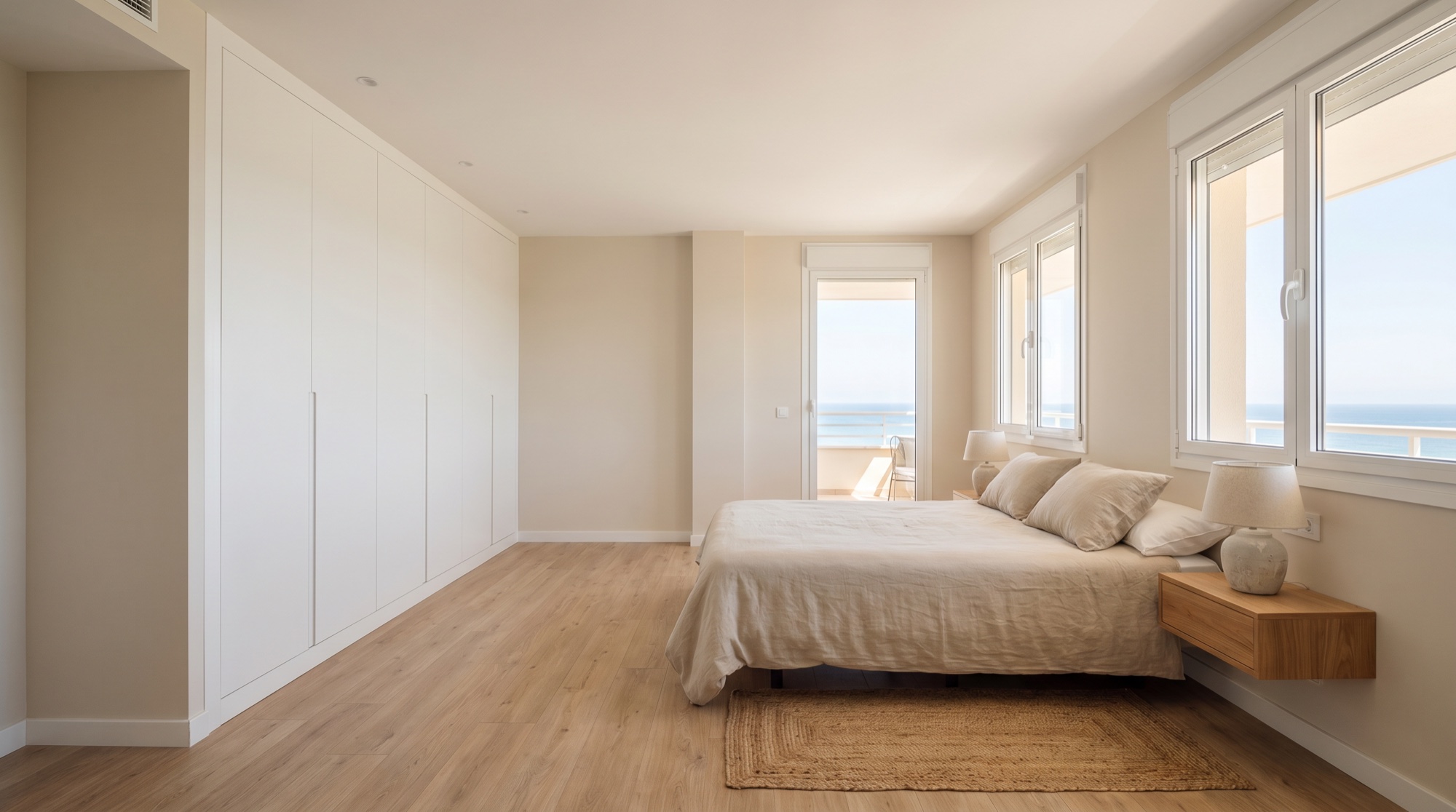
This is where lacquer pulls furthest ahead of melamine. A lacquered finish on a bespoke wardrobe delivers a perfectly uniform surface with no visible joins, and a depth of colour that shifts with natural light. White lacquer on wardrobes remains the most sought-after finish in Cádiz, particularly for bedrooms and living rooms in a Mediterranean style, where the brightness of the home amplifies the sense of space that this finish creates.
Melamine has improved enormously in recent years. Manufacturers now offer synchronised textures that mimic wood grain with striking realism, both to the eye and to the touch. Finishes such as natural oak, dark walnut or bleached ash in melamine are practically indistinguishable from real timber at a normal viewing distance. For renovations in flats in the centre of Cádiz, Jerez or El Puerto de Santa María where a warm feel is desired without the cost of solid wood, textured melamine is a smart choice.
- Gloss lacquer: mirror-like effect, highly elegant, but shows fingerprints and requires frequent cleaning. Ideal for living rooms and reception areas.
- Matt or satin lacquer: sophisticated look without the drawbacks of gloss. The most versatile lacquer option.
- Plain melamine: solid, uniform colours, a solid budget alternative to matt lacquer for bedroom wardrobes and dressing rooms.
- Textured melamine: mimics wood, concrete or linen. Perfect for kitchens and rooms with a Nordic, rustic or industrial aesthetic.
- Super-matt melamine (phenolic): ultra-matt finish with a soft feel, resistant to fingerprints. A growing trend in designer kitchens.
One important detail: lacquer can be matched to any RAL or NCS colour on request, meaning you can perfectly match the tone of a wall, an existing piece of furniture or a decorative element. With melamine you're limited to the manufacturer's catalogue, which, although extensive (typically over 200 references), doesn't offer that level of personalisation. If your renovation in Cádiz calls for a very specific colour, lacquer is the only route.
Maintenance and cleaning: melamine vs lacquer in kitchens, wardrobes and dressing rooms
For day-to-day maintenance, melamine wins on simplicity. A damp cloth with a mild washing-up liquid is all you need to keep melamine wardrobes in your kitchen or dressing room looking their best. The surface is resistant to most household cleaning products, doesn't fade in direct sunlight and withstands regular contact without losing its appearance. If a panel is badly damaged, it can be replaced individually without affecting the rest of the piece.
Lacquer requires more care. Clean it with a slightly damp microfibre cloth and, ideally, products specifically formulated for lacquered surfaces. Abrasive cleaners, neat bleach and scouring pads can permanently damage the finish. In kitchens, built-up grease and oil splashes must be wiped away promptly to prevent them from soaking into the surface. On the other hand, a well-maintained lacquered piece can be re-lacquered after 8–10 years to restore its original appearance, something that simply isn't possible with melamine.
With kitchen melamine on cabinet units, maintenance comes down to avoiding prolonged contact with water at the edges and replacing the silicone seals every 4–5 years in areas close to the sink. For lacquered furniture from a Cádiz joinery like ours, we offer a touch-up and refresh service at five years from installation, keeping the finish looking as good as new without the need to re-lacquer the entire piece.
Which finish suits which room: kitchen, bedroom, living room
Our recommendation, built on more than fifteen years of renovating homes across the province of Cádiz, is clear: there is no single superior material, only the right material for each situation. Here are our room-by-room recommendations.
- Kitchen: textured or super-matt melamine for heavy use and tighter budgets. Satin lacquer if you're after a designer look and your budget stretches to it. In either case, always specify moisture-resistant board.
- Master bedroom: white or coloured lacquer for built-in wardrobes and dressing rooms where aesthetics are the priority. Plain white melamine as a budget-friendly alternative that still achieves a good finish.
- Secondary bedrooms and children's rooms: melamine, without question. Its resistance to scratches and knocks is far superior, and if a child damages a panel, the replacement cost is minimal.
- Living room and reception areas: matt or satin lacquer for TV units, shelving and sideboards. This is the room where the quality difference between finishes is most apparent.
- Bathroom: lacquer with a damp-proof treatment. Melamine only if you use high-quality moisture-resistant board with perfectly sealed edges.
- Dressing room: melamine carcass with lacquered fronts. This combination allows savings on the interior (shelves, drawers and dividers in melamine) while presenting a premium-quality exterior.
A strategy we use regularly for bespoke wardrobes in Cádiz is the mixed approach: melamine interiors and lacquered fronts. The inside of a wardrobe isn't visible when the doors are closed, so melamine does its job perfectly well there. The lacquered fronts deliver the premium aesthetic that makes all the difference. With this approach, the overall cost comes in at 30–40% below a fully lacquered wardrobe while achieving exactly the same visual impact.
How to decide between melamine and lacquer based on your budget and renovation
To work out whether melamine or lacquer is the better choice for you, start by defining three variables: your total renovation budget, the rooms where the furniture will go, and the degree of personalisation you're looking for. If your budget for wardrobes and fitted furniture doesn't exceed €3,000–€4,000, good-quality melamine will give you an excellent result throughout the home. If your investment in furniture goes beyond €6,000 and you want a genuinely distinctive finish, lacquer makes sense in the most prominent areas of the property.
Another factor to consider is your renovation timeline. Melamine can be manufactured and installed in 2–3 weeks, while lacquer requires 4–6 weeks from the initial measure to final installation. If you're keen to move into your renovated home quickly, melamine saves you several weeks of waiting. If you're planning your renovation well ahead, the longer lead time for lacquer needn't be a sticking point.
At Reformas By Bianca we help you find the right balance between investment and outcome. We work with both materials to the same high standard, and we won't recommend lacquer where melamine does the job perfectly, nor the other way round. If you're planning a renovation in Cádiz and need advice on the finishes for your bespoke wardrobes and furniture, get in touch for a no-obligation visit. We measure, design and quote free of charge across the entire province of Cádiz, from Tarifa to Sanlúcar de Barrameda.