In Cádiz, fly screens are not a luxury, they are a practical necessity. The coastal climate, mild temperatures for much of the year and proximity to the sea and salt marshes mean that mosquitoes, flies and other insects are regular companions for at least six months. Add in the fine sand carried by the Levante wind, and leaving windows open without protection becomes a genuine problem.
A well-fitted fly screen lets you ventilate your home naturally without insects, sand or excessive dust. It is one of the cheapest and most rewarding investments you can make in your property, especially if you live near the sea or green areas in San Fernando, Chiclana, Puerto Real or Cádiz city itself.
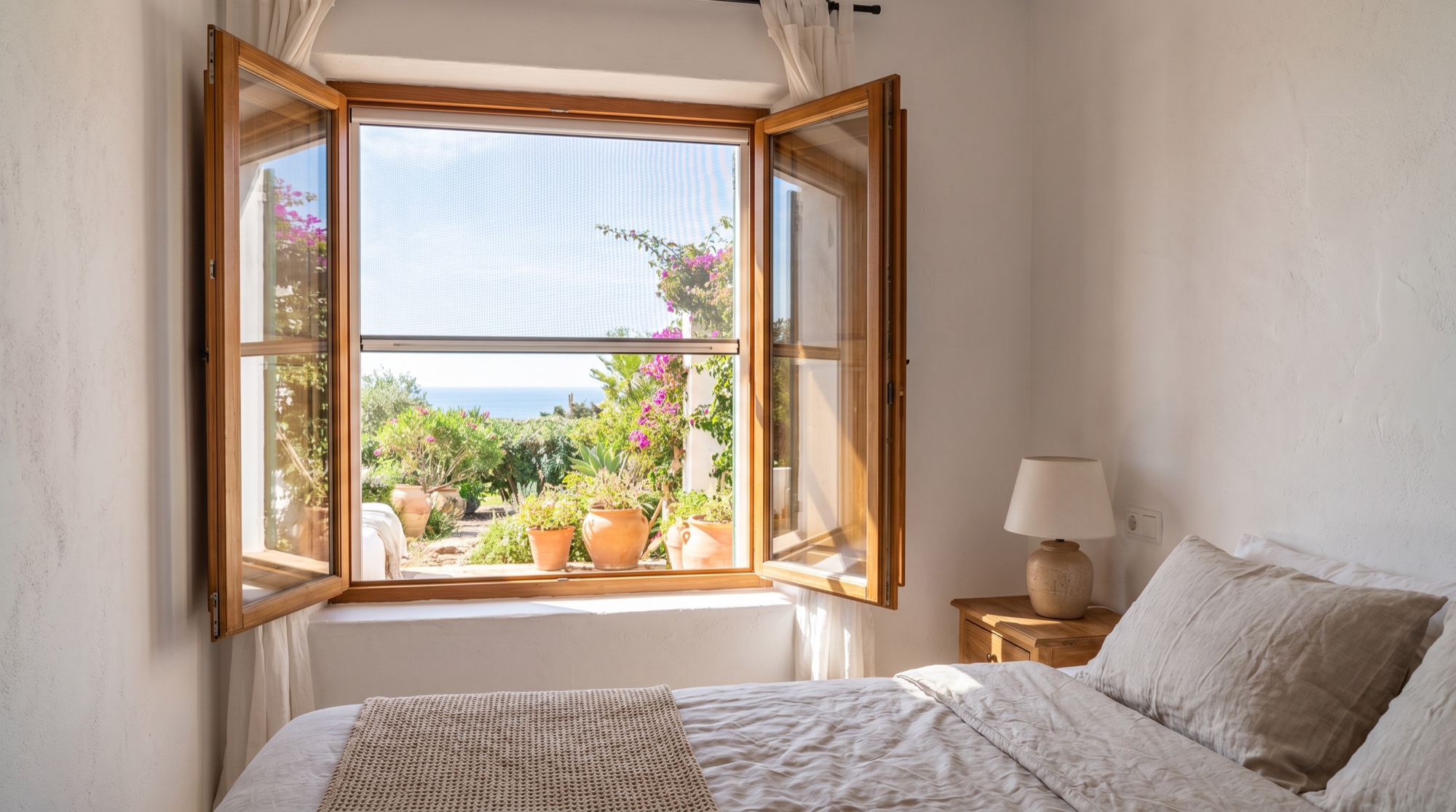
Insect season in Cádiz: why fly screens are essential
Mosquito season in Cádiz runs from April to November, considerably longer than in the Spanish interior. The combination of Atlantic humidity, temperatures that rarely drop below 12 degrees even in winter and the proximity of salt marshes (Bay of Cádiz, San Fernando salt pans, Chiclana estuaries) creates the perfect breeding ground for tiger mosquitoes and common mosquitoes. In neighbourhoods like La Vina, Santa Maria or El Populo, the sea breeze also carries mosquitoes from the marsh areas near the port.
In Extramuros and Bahia Blanca, although there is less humidity than in the old town, the landscaped areas and nearby parks attract mosquitoes during hot summer nights. Having fly screens on every window you regularly open is not a luxury, it is the most effective and affordable way to sleep with natural ventilation free from bites and buzzing.
Types of fly screen
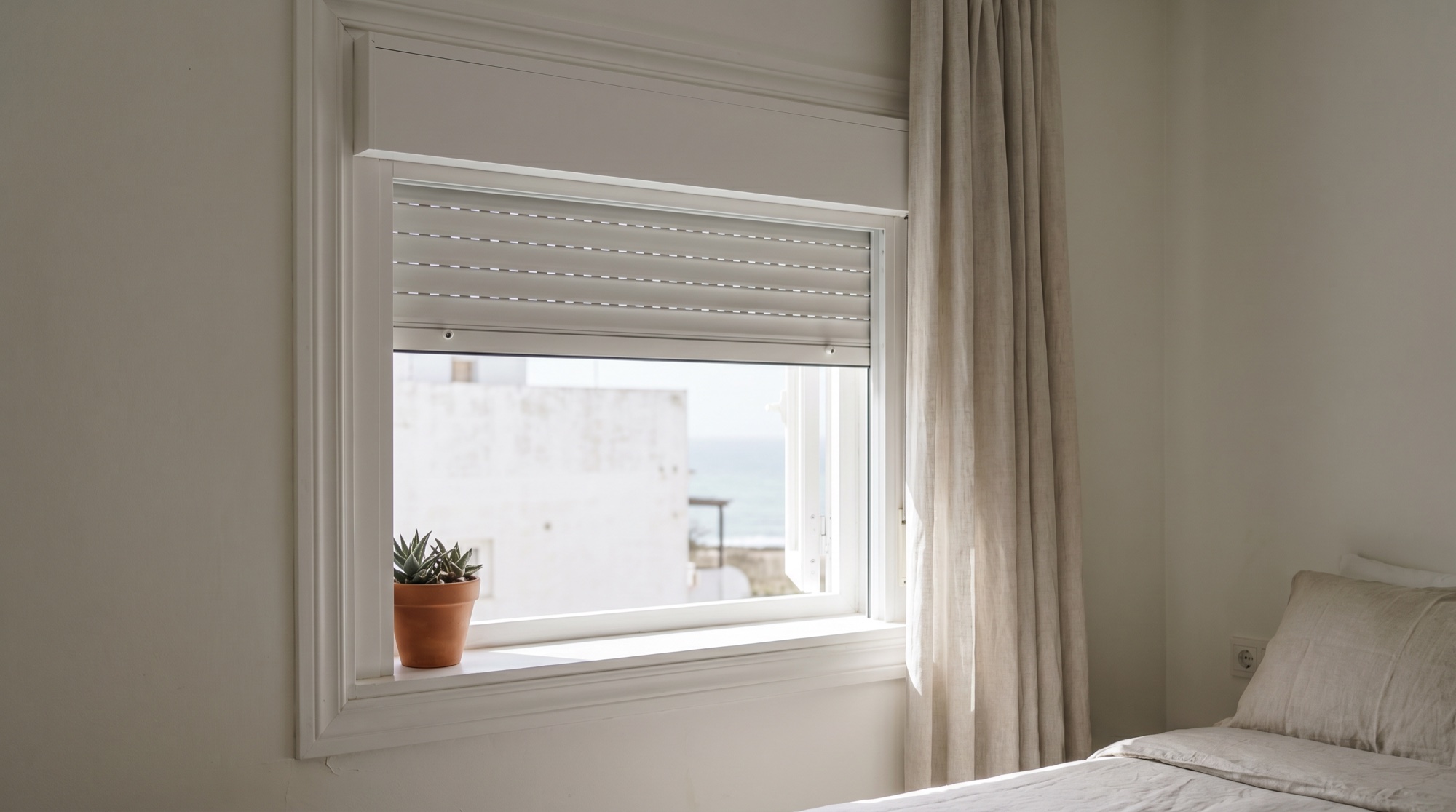
- Roller: retracts into an upper cassette when not in use. The most popular and convenient type. Integrates visually with the window and is unobtrusive when retracted. Available in vertical (for windows) and lateral (for doors).
- Fixed: a frame with mesh that is permanently installed. The most affordable and simplest type. Ideal for windows that don't need frequent access.
- Pleated: folds like an accordion. Perfect for terrace doors and large openings where a roller screen doesn't fit or is inconvenient. Can be opened from any point.
- Magnetic: opens and closes automatically with central magnets. Affordable and practical for frequently used doors. Requires no mechanism.
- Sliding: slides on a lower track. Useful for sliding windows where the screen must move with the pane.
Fly screen prices in Cádiz (2026)
| Type | Price per window | Full flat (6 windows) |
|---|---|---|
| Fixed | €40–80 | €240–480 |
| Roller | €80–150 | €480–900 |
| Sliding | €70–130 | €420–780 |
| Pleated (terrace door) | €150–250 | — |
| Magnetic (door) | €30–60 | — |
Prices include aluminium frame, fibreglass mesh and installation. For non-standard or special-shaped windows (arches, trapezoids), the price rises by 30–50% for bespoke manufacture. Standard fibreglass mesh is sufficient for most homes, but if you have cats or dogs that might scratch it, stainless steel mesh is available for an extra €20–40 per window.
Detailed price by type and window size
| Type | Small window (60x100 cm) | Standard window (100x120 cm) | Balcony door (90x210 cm) |
|---|---|---|---|
| Fixed | €40–55 | €55–80 | €75–110 |
| Roller | €80–110 | €100–150 | €130–200 |
| Sliding | €70–95 | €90–130 | €120–180 |
| Pleated | — | €120–180 | €150–250 |
Window size is the factor that most affects price after the type of fly screen. In flats in the old town of Cádiz (El Populo, La Vina), windows tend to be smaller and irregularly shaped, which may require bespoke manufacture. In Extramuros and Bahia Blanca, windows are more standard and prices stay in the lower range.
Want to install fly screens in your flat in Cádiz? Request a no-obligation quote.
Mesh material comparison: fibreglass vs aluminium vs stainless steel
| Feature | Fibreglass | Aluminium | Stainless steel |
|---|---|---|---|
| Price (supplement per window) | Included in base price | +€10–20 | +€20–40 |
| Pet resistance | Low (tears easily) | Medium (resists light scratching) | High (claw-resistant) |
| Outward visibility | Excellent (85–90% light) | Good (80–85% light) | Good (80–85% light) |
| Corrosion resistance (salt air) | Very high (does not corrode) | Medium (can oxidise on the seafront) | Very high (316 grade resists salt air) |
| Estimated durability | 5–8 years | 8–12 years | 15–20 years |
| Fine sand filtration | Good | Very good (finer weave) | Very good (fine, rigid weave) |
For properties on the beachfront or streets directly exposed to the Levante wind, we recommend fibreglass or 316-grade stainless steel mesh. Aluminium mesh can show signs of oxidation within 3–4 years if not cleaned regularly. In inland neighbourhoods such as Bahia Blanca or Extramuros, any material works well.
Factors that affect fly screen prices in Cádiz
- Window size: a 60x100 cm window can cost half as much as a 90x210 cm balcony door for the same type of fly screen.
- Irregular shapes: windows with arches, angles or non-rectangular shapes (common in the old town of Cádiz) require bespoke manufacture, with a 30–50% surcharge.
- Mesh type: fibreglass is the most affordable; stainless steel can add €20–40 per window.
- Property accessibility: in upper-floor flats in the old town without a lift, transporting materials may incur a small surcharge.
- Quantity: fitting fly screens throughout the whole flat at once is cheaper per unit than doing it window by window.
- Profile colour: white and silver are standard at no extra cost. Special RAL colours, wood-effect or black finishes can add €10–25 per unit.
When should you install fly screens in Cádiz?
The best time to install fly screens is during a renovation or right after replacing your windows, as they can be integrated with the new joinery at no extra survey cost. If you are not renovating, spring (March–April) is the ideal time: you get ahead of mosquito season and enjoy open windows from the first warm day.
Installation process and timelines
Fly screen installation is quick and clean, with no building work or debris. The full process from survey to completion follows these steps:
- Survey visit (30–45 minutes): a technician measures each window, checks the type of joinery and recommends the most suitable model.
- Manufacture (5–10 working days): the fly screens are made to the exact measurements of each opening. For standard sizes, the lead time can be reduced to 3–5 days.
- Installation (15–30 minutes per window): the frame or cassette is secured with screws or high-strength adhesive, the mechanism is adjusted and operation is checked.
- A full flat of 6–8 windows is installed in a single morning (3–4 hours).
Fly screen maintenance in a coastal climate
The salt air, sand and Atlantic humidity of Cádiz require a minimum of maintenance to ensure fly screens last as long as possible. With these basic care steps, a quality fly screen lasts between 8 and 15 years without problems:
- Clean the mesh every 2–3 months with soapy water and a soft brush. On the beachfront, do this monthly to remove salt air build-up.
- Check the guides and tracks at the start of the season (March–April). Lubricate moving parts with silicone spray, never with oil, which attracts dust.
- If the mesh gets a hole, don't wait for the tear to grow. Most meshes can be replaced without changing the entire frame for €15–30 per mesh.
- In winter, retract roller screens into their cassette to protect the mesh from the Levante wind and heavy rain.
- Avoid hitting the mesh when cleaning windows. A damaged fibreglass mesh loses tension and leaves gaps where insects can enter.
If you are replacing your windows at the same time, integrating windows and fly screens in the same factory order saves an extra survey visit.
Common mistakes when choosing fly screens
- Choosing the cheapest screen without considering usage: a fixed screen on a frequently used terrace door will force you to remove it constantly.
- Not measuring correctly: a 5 mm error can mean the screen doesn't fit or leaves gaps. We always recommend a professional survey.
- Fitting aluminium mesh on the beachfront: it corrodes in salt air. Better to use fibreglass or 316 stainless steel.
- Forgetting terrace doors: mosquitoes enter mainly through open doors, not just windows.
- Buying fly screens from big-box stores without professional installation: the frames come in generic sizes that rarely fit perfectly and do not include fine adjustment.