How to insulate your apartment from heat in Cádiz without major works: effective solutions in 2026
Why the heat is so extreme in Cádiz flats
Cádiz clocks up more than 3,000 hours of sunshine a year, and summer temperatures inside homes routinely top 35 °C, particularly in upper-floor flats in the old town and neighbourhoods such as Puerta Tierra, La Laguna and Cortadura. The combination of a south-south-westerly aspect, solid ostionera stone facades with no cavity wall, and flat roofs that soak up radiation turns many flats into proper ovens from June onwards.
Add to that an ageing housing stock: more than 60% of buildings in the city of Cádiz were built before 1980, when thermal insulation standards simply did not exist. Aluminium windows without thermal breaks, single-glazed panes and open-box roller shutters are standard in thousands of homes. The upshot is that air conditioning has to work twice as hard, energy bills shoot up, and comfort remains stubbornly poor.
The good news is that you can cut indoor temperatures by between 4 and 8 °C without touching the building's structure. Below we walk through every solution, with specific materials, prices updated to 2026, and advice tailored to Cádiz's climate and architecture. If you want to go further once you've applied these measures, Reformas By Bianca can help with minor building works that multiply the results.
Insulating windows without replacing them: draught seals, films and thermal curtains
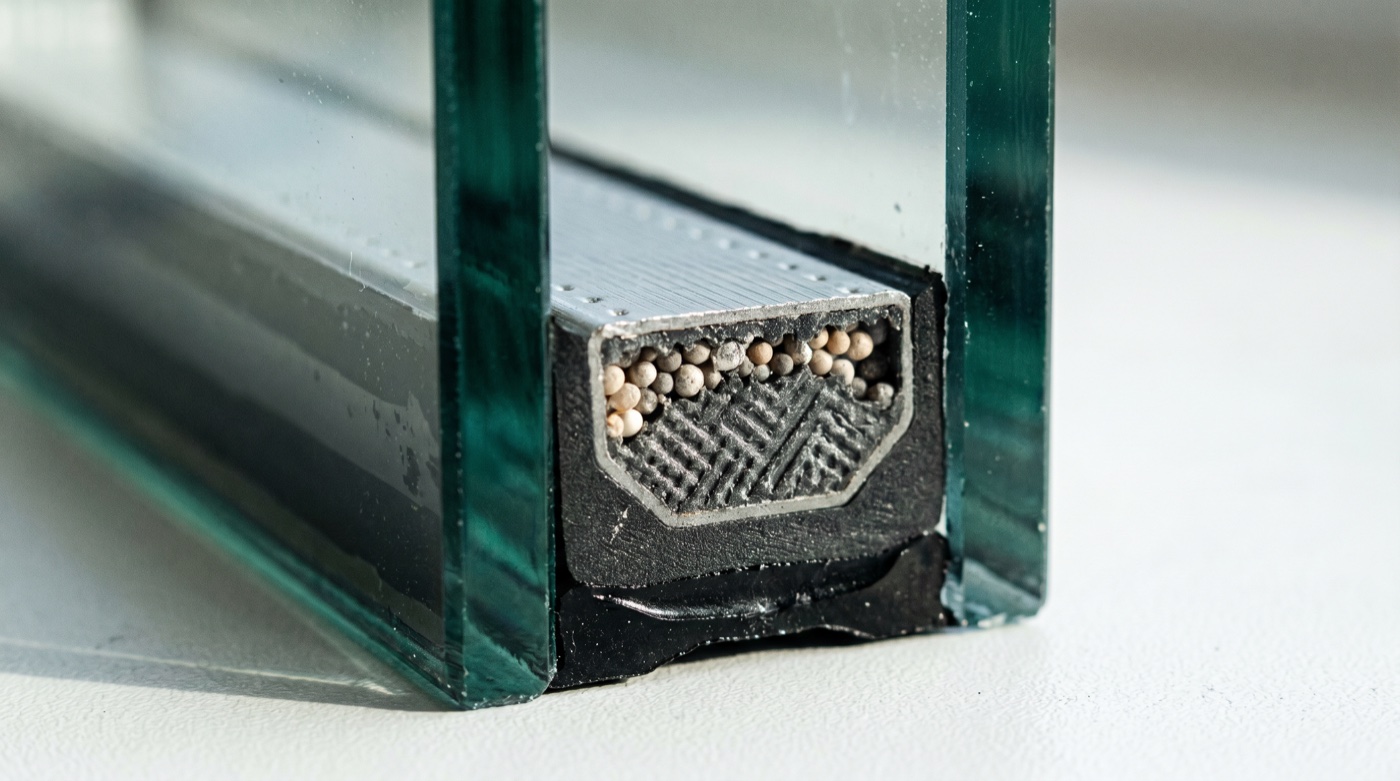
Windows are the weakest point in any flat's thermal envelope. A single pane transmits up to 85% of solar radiation, and worn seals let in draughts of hot air that cancel out any cooling effort. Before you consider replacing your windows, there are three interventions you can do yourself in an afternoon that make a noticeable difference.
EPDM or silicone adhesive draught strips are your first line of defence. They fit around the window frame to seal the gaps through which heat enters. A roll of P- or D-profile draught strip costs between €5 and €12 and covers around four standard windows. Fitting takes under ten minutes per window: simply clean the frame with alcohol, cut to length and press on. Tubular silicone strips last three to five years before needing replacement.
Adhesive solar control films for glass are the second key intervention. A solar control film reflects between 50% and 80% of infrared radiation without making the room too dark. They come in mirror, silver or bronze finishes. A 1.5 m × 3 m roll costs between €15 and €30 at large DIY retailers in Cádiz or online. They go on with soapy water and a squeegee, with no permanent adhesive, making them ideal for rented flats. On south- and west-facing windows (where the afternoon sun hammers hardest in Cádiz) a solar film can reduce glass surface temperature by 8–12 °C.
Thermal curtains with a reflective backing complete the set. Unlike a standard curtain, thermal ones have an aluminium or PVC lining that reflects heat back outside. Prices range from €20 to €45 per drop at 140 × 260 cm. Used together with a solar film and draught strip, the combined effect can bring the room temperature down by 3–5 °C without switching the air conditioning on.
External blinds and shutters: the most effective solar barrier with no building work
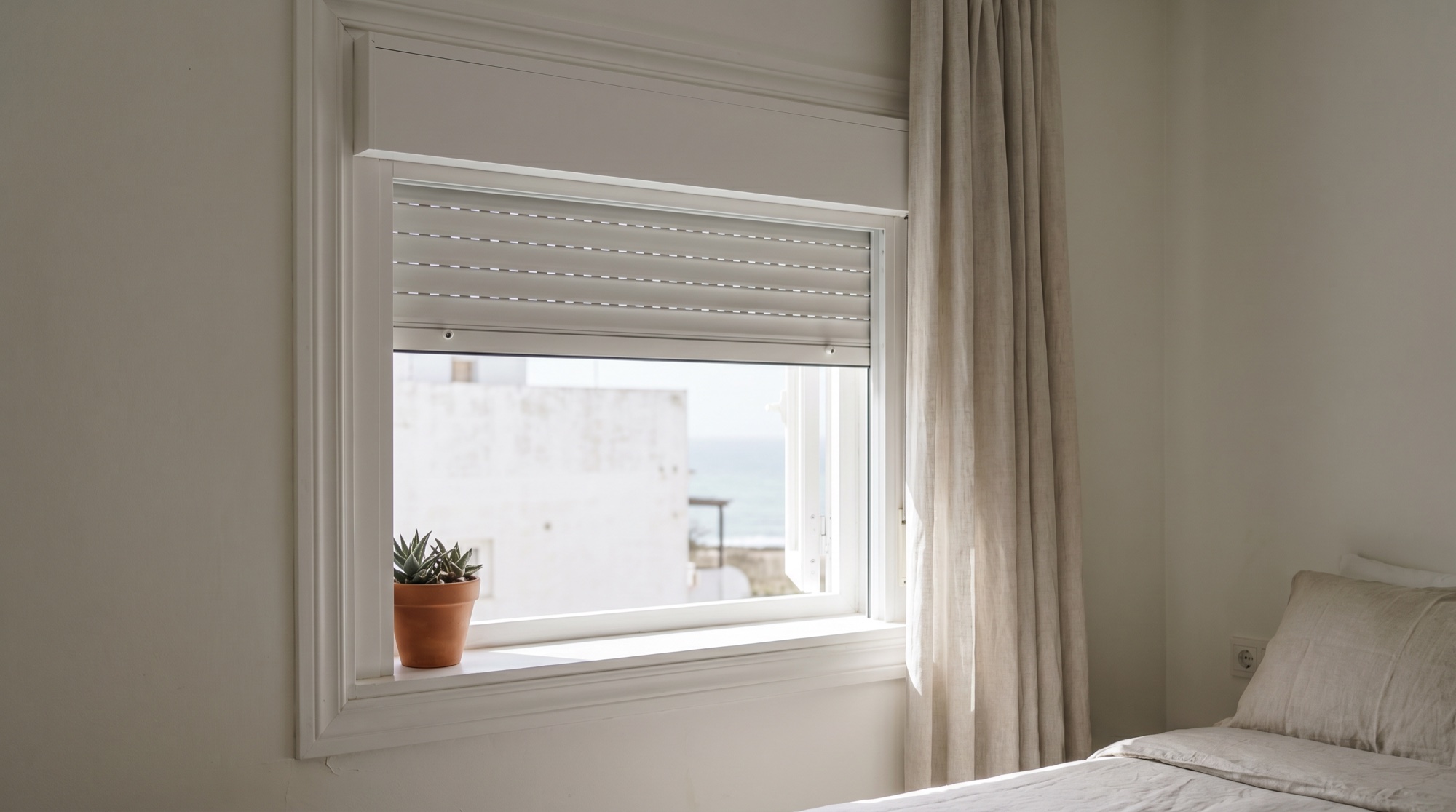
The principle is straightforward: it is far more effective to stop the sun before it hits the glass than to try to block it once it is already inside. External roller shutters in PVC or aluminium with adjustable slats allow you to block direct radiation without sacrificing ventilation entirely. If your flat already has shutters but they are broken or made of thin plastic, replacing just the slats costs between €30 and €80 per window and in many cases does not require planning permission.
The right order to insulate against heat
- 1Seal the gapsDraught strips on windows and doors and XPS panels in shutter boxes: from €5 and up to 1-3 °C cooler.
- 2Block the radiationSolar film on the glass, thermal curtains and screen blinds stop the sun.
- 3Ventilate at nightNight flushing and cross-ventilation below 25 °C, closing up before 9 am.
- 4Step up to minor works if neededCavity insulation (€15-25/m²) or thermally broken windows when the flat still tops 30 °C.
Screen roller blinds (increasingly popular in Cádiz flats) filter between 85% and 95% of solar radiation depending on the fabric's openness factor. A 120 × 200 cm screen blind starts at around €45 in a manual version and from €120 motorised with a remote. The big advantage is that they maintain the view outside and let through diffused light, which is particularly useful in smaller flats where dropping full shutters would make the room feel claustrophobic.
For balconies and terraces facing west, a cassette awning is another option that requires no structural work. A 3 × 2 metre awning with an acrylic canopy costs between €180 and €400 installed, and in many buildings in Cádiz it can be fixed with anchors into the slab above without needing a permit. An awning can reduce the temperature of the balcony floor by up to 15 °C, which means considerably less heat seeping in through the sliding door.
Practical tip: in west-facing flats in Cádiz, combine shutters lowered to 80% + a solar film on the glass + a thermal curtain inside. This triple barrier can keep the room between 25 and 27 °C until 6 pm without air conditioning, even in July.
How to draught-proof doors and gaps to block heat without touching the walls
Heat does not only enter through windows. The front door, roller shutter boxes, service penetrations and the joints between skirting boards and walls are all infiltration routes that go unnoticed. In an older Cádiz flat, these leaks can account for as much as 25% of unwanted heat gain during summer.
Brush-seal or double-roller draught excluders for doors fit along the bottom and eliminate the gap through which warm air drifts in from the landing or light well. They cost between €8 and €18 and attach with screws or adhesive. For shutter boxes, which in many flats built between the 1960s and 1980s are little more than hollow partition walls, there are 3 cm extruded polystyrene insulating panels that can be cut to size and glued inside the box. The material costs under €10 per window and the improvement is immediate: the shutter box stops radiating heat into the room.
Neutral silicone or acrylic sealant is the answer for cracks around frames, the joints between walls and window casements, and gaps around air conditioning ducts. A 300 ml cartridge costs between €4 and €7 and is enough to seal several windows. It is important to use neutral (non-acid) silicone to avoid damaging aluminium frames or paintwork. A full draught-proofing job on a three-bedroom flat can be done in a single morning.
Thermal and reflective paint on ceilings and walls: does it actually work?
Thermal paint is one of the most debated solutions on the market. It contains ceramic or hollow microspheres that create a low-thermal-conductivity layer on the painted surface. Manufacturers promise reductions of between 3 and 7 °C in the surface temperature of walls and ceilings. In our experience in Cádiz flats, reality sits closer to the lower end of that claim: a difference of between 2 and 4 °C on surfaces exposed to direct radiation.
Where it does prove cost-effective is in top-floor flats with flat roofs, which take a particular battering in Cádiz. Applying high-solar-reflectance white paint (SRI above 100) to the shared roof terrace can bring the ceiling temperature of the top floor down by 10–15 °C. A 15-litre tin of exterior reflective paint costs between €60 and €110 and covers around 10–12 m². If the roof terrace is shared, you will need to raise it at a residents' meeting, but the cost per owner is usually very modest.
For interiors, thermal paint makes sense on walls that receive direct sun for several hours (south- and west-facing). On interior walls or those in permanent shade, the benefit is marginal and does not justify the extra cost over standard emulsion. Interior thermal paint costs between €12 and €25 per litre, compared with €4–€8 for standard paint. Our recommendation: use it only where a thermal assessment confirms it is warranted, not as a blanket solution.
Cross-ventilation and air flushing: making the most of Cádiz's breeze for free
Cádiz is one of the windiest cities in Spain, with prevailing Levante (easterly) and Poniente (westerly) winds alternating throughout the year. Harnessing that breeze is the cheapest and most effective way to reduce heat at home without any building work. Cross-ventilation means opening windows on opposite sides of the flat to create an airflow that refreshes the entire volume of a room within minutes.
The most effective technique is night-time flushing: open the windows once the outdoor temperature drops below 25 °C (usually from around 10 pm in summer in Cádiz) and close them first thing in the morning, before 9 am. This allows the thermal mass of the walls and floors to cool down overnight and release that coolness during the hottest hours of the day. In flats with good thermal inertia, such as those in the old town with thick ostionera stone walls, this strategy can keep the interior below 28 °C until midday with no mechanical assistance whatsoever.
If your flat does not have windows on opposite sides, you can force the airflow with a fan placed in the smaller window, drawing air out, while the larger window remains open. This negative pressure trick creates a chimney effect that multiplies air changes. A 30 cm window fan uses around 40 W (less than 1 cent per hour) and shifts more air than a 3,000-frigorie split unit in fan-only mode.
- Open windows when the outdoor temperature is lower than indoors (check the hourly forecast on AEMET for Cádiz).
- Close windows, shutters and thermal curtains before 9 am to trap the night coolness inside.
- Position a floor fan pointing at the ceiling to distribute the cool air that has settled near the floor.
- Use the wind direction to your advantage: with a Poniente wind, open the west-facing side; with Levante, the east.
When it is worth taking the step to minor building works
No-work solutions have a ceiling. If, after applying draught strips, solar films, thermal curtains and cross-ventilation, your flat is still topping 30 °C during the hottest part of the day, you probably need an intervention that touches some element of the structure. The good news is that there are minor works which do not require full planning permission and that amplify everything you have already done.
Blown-in cavity wall insulation is the most cost-effective solution when the building has a cavity facade, common in Cádiz constructions built after 1970. Cellulose, mineral wool or EPS beads are injected through small 25 mm drill holes that are then plugged. The cost ranges from €15 to €25 per square metre, and an 80 m² flat can be done in a single day without producing any rubble. The typical improvement is 5–8 °C on the treated walls.
Replacing windows with thermally broken aluminium frames and double glazing is another high-impact intervention. In Cádiz, at 2026 prices, a 120 × 120 cm sliding window with a thermal break costs between €280 and €450 installed. The difference compared with single glazing is dramatic: solar control double glazing reduces thermal transmittance by 70%. If you can only afford to replace a few windows, prioritise south- and west-facing ones, as these receive by far the most heat.
At Reformas By Bianca we carry out this type of work every day in Cádiz flats. If you would like a free assessment of your home to find out which combination of solutions suits you best, get in touch with us, no obligation.
Summary: a no-work improvement checklist ranked by impact and cost
Below is a summary table of all the no-work solutions covered in this guide, ranked from highest to lowest impact-to-cost ratio. Start at the top and work your way down according to your budget and the specific needs of your flat.
| Solution | Approximate cost | Estimated thermal reduction | Installation difficulty |
|---|---|---|---|
| Cross-ventilation and night flushing | €0 (free) | 3–6 °C | None |
| Draught strips on windows and doors | €5–€18 / home | 1–2 °C | Very easy (self-adhesive) |
| Sealing shutter boxes with XPS board | €8–€10 / window | 1–3 °C | Easy (cut and stick) |
| Adhesive solar film on glass | €15–€30 / roll | 3–5 °C on glass surface | Easy (soapy water) |
| Thermal curtains with reflective lining | €20–€45 / drop | 2–4 °C | Very easy (curtain pole) |
| Screen roller blinds | €45–€120 / unit | 3–5 °C | Medium (wall fixings) |
| Reflective paint on roof terrace | €60–€110 / tin (10–12 m²) | 4–8 °C on top floor | Medium (roof access required) |
| Cassette awning | €180–€400 installed | 3–6 °C in adjacent room | Requires installer |
| Interior thermal paint (walls) | €12–€25 / litre | 2–4 °C on treated wall | Easy (roller) |
If you apply the first four solutions in the table (total cost under €60), you can achieve a cumulative reduction of between 4 and 8 °C in the hottest rooms in your flat. For most Cádiz flats, that means dropping from 34–36 °C to 28–30 °C during the hottest part of the day without switching the air conditioning on, a difference that transforms summer liveability entirely.
Remember: order matters. Seal first (draught strips, shutter boxes), then block (films, curtains, blinds), then ventilate at night. If you start with ventilation before sealing, you will be letting hot air in through the gaps all day and losing the night coolness far more quickly.