Exterior aluminium doors are the preferred solution in Cádiz for access to terraces, patios, gardens and entrances to detached houses. Thermal break aluminium resists salt air, does not warp in heat and allows designs with slim profiles that maximise the glazed area. It is the material that best withstands the passage of time in a coastal environment.
In this guide we give you real prices for exterior aluminium doors in the province of Cádiz, compare the different opening types and explain when to choose aluminium over PVC or timber.
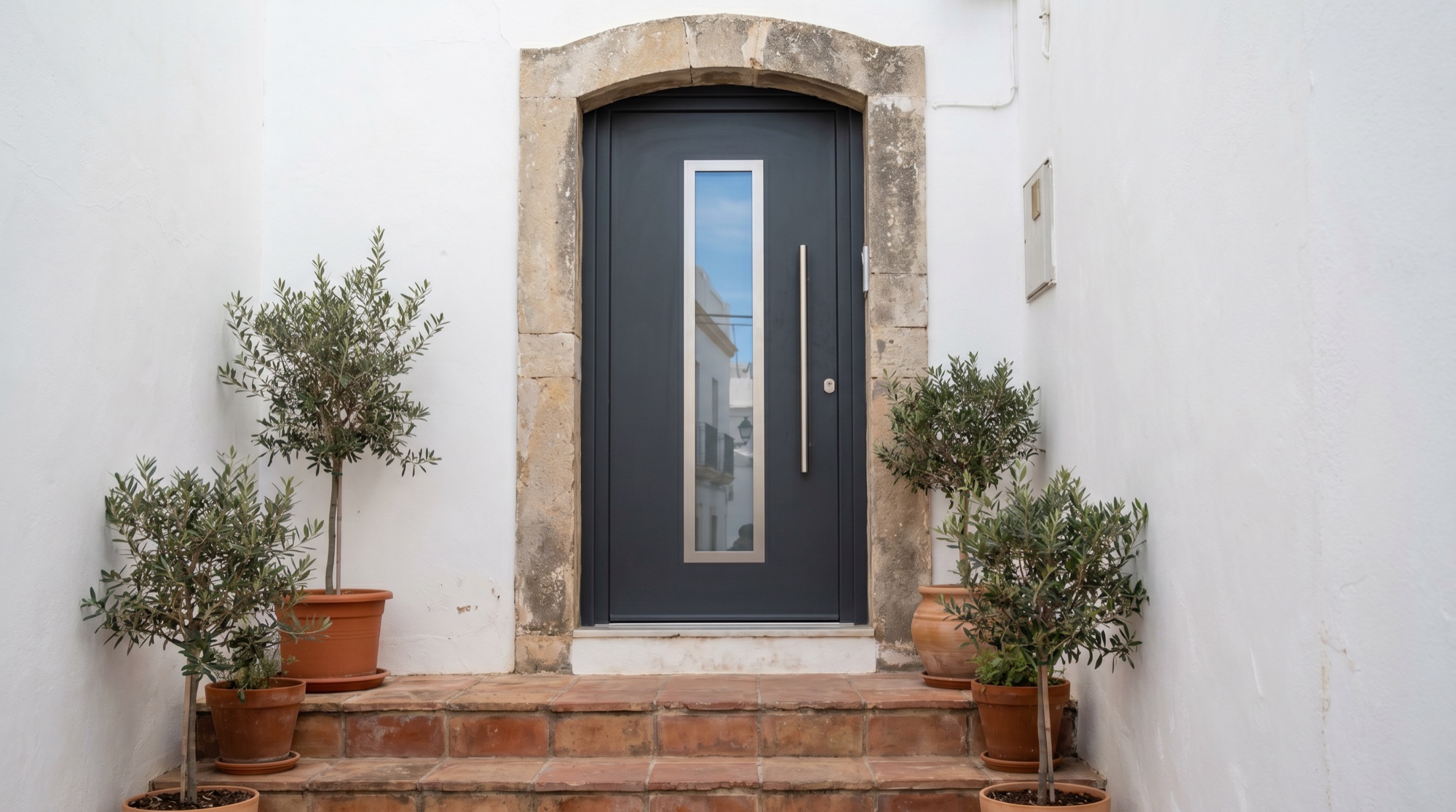
Types of exterior aluminium door
- Hinged door (1 or 2 leaves): the classic door that opens inward or outward. The most common choice for main entrances and terrace access of moderate width (up to 1.8 m with two leaves).
- Sliding door (1, 2 or 3 leaves): slides on tracks recessed into the floor. Ideal for large openings (2–6 m) where a hinged door would be impractical. The lift-and-slide (tilt-and-slide) versions offer the best insulation.
- Folding door (accordion type): several leaves that fold and stack to one side. Allows openings of up to 6–8 m wide, creating a seamless transition between indoors and terrace. The premium option for villas and penthouses.
Exterior aluminium door prices in Cádiz (2026)
| Type | Price (installed) | Typical size |
|---|---|---|
| Hinged 1 leaf | €500–900 | 0.9 x 2.1 m |
| Hinged 2 leaves | €800–1,400 | 1.5–1.8 x 2.1 m |
| Sliding 2 leaves | €1,000–2,000 | 2.0–3.0 x 2.2 m |
| Lift-and-slide | €1,500–3,000 | 2.5–4.0 x 2.3 m |
| Folding (4–6 leaves) | €2,000–4,500 | 3.0–6.0 x 2.2 m |
Prices include thermal break aluminium profile, double glazing, hardware, lacquer in standard colour and installation. Special RAL colours, laminated safety glass or timber-effect finishes add between 10% and 25% to the base price.
Available finishes: lacquered, anodised and timber effect
The finish is both an aesthetic and a functional decision. In Cádiz, where salt air and Atlantic humidity attack metal surfaces, choosing the right finish extends the door's lifespan and reduces maintenance.
- Lacquered (powder coating): the standard finish. Applied electrostatically and oven-cured at 180–200 °C, creating a hard, uniform layer. Available in the full RAL chart (over 200 colours). Qualicoat certification guarantees 25+ years without flaking. For coastal areas, always specify Qualicoat Seaside.
- Anodised: an electrochemical process that creates a protective aluminium oxide layer on the metal surface itself. It is extremely corrosion-resistant and never flakes. Available in natural (silver), bronze, black and gold finishes. Ideal for very harsh environments such as beachfront properties.
- Timber effect (sublimation): a decorative film reproducing the texture and grain of wood is applied using heat. The visual result is very realistic and allows you to have the warm appearance of timber with the durability of aluminium. It adds 15–25% to the standard lacquer price.
Aluminium vs PVC vs steel: comparison for exterior doors
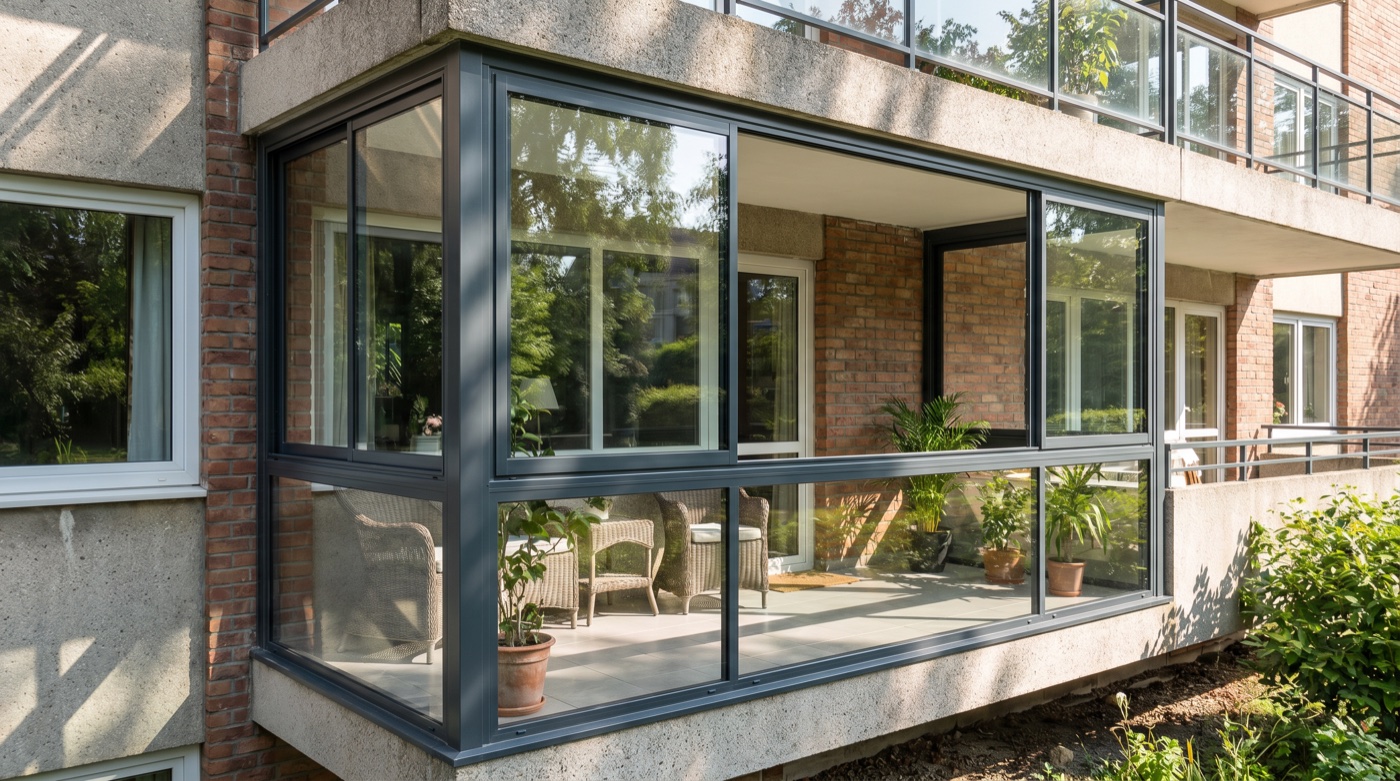
| Factor | TB Aluminium | PVC | Steel |
|---|---|---|---|
| Salt air resistance | Excellent (Qualicoat Seaside) | Very good (does not corrode) | Poor without special treatment |
| Profile weight | Medium | Light | Heavy |
| Profile slimness | Very slim (45–65 mm) | Thick (70–90 mm) | Slim (50–60 mm) |
| Maximum viable size | Up to 6–8 m (folding) | Up to 3–4 m (sliding) | Up to 2 m (hinged) |
| Thermal insulation | Good (with TB) | Very good (natural) | Low (thermal bridge) |
| Anti-burglary security | High (with security hardware) | Medium | Very high |
| Indicative price (hinged 1 leaf) | €500–900 | €400–700 | €800–1,500 |
| Durability in Cádiz | 40–50 years | 30–40 years | 15–25 years (corrosion) |
Steel is ruled out for most exterior uses in Cádiz: corrosion from salt air is inevitable even with galvanising, and maintenance is constant. It only makes sense for armoured security doors at main entrances where intrusion resistance is the absolute priority.
Looking for exterior aluminium doors in Cádiz? Request a no-obligation quote with survey included.
Why aluminium for exterior doors in Cádiz?
Aluminium is the most resistant material to Cádiz's coastal conditions. It does not corrode in salt air (with Qualicoat lacquer), does not warp with temperature fluctuations and allows large doors to be manufactured with slim profiles. Compared with PVC, aluminium handles the weight of large panes better without the profiles flexing, making it the natural choice for sliding doors over 2 m and folding doors.
PVC remains a good option for moderately sized doors (hinged 1–2 leaf) where thermal insulation is the priority and the budget is tighter. In our experience, most clients in Cádiz choose aluminium for exterior doors and PVC for windows, combining the best of each material.
Thermal break: essential in Cádiz
The thermal break (TB) is a polyamide barrier that separates the outer and inner faces of the aluminium profile, preventing heat or cold from being transmitted directly through the metal. Without a TB, an aluminium profile conducts heat 1,000 times better than timber, which causes condensation in winter and massive heat ingress in summer.
In Cádiz, where the outdoor temperature can exceed 40 °C in summer and relative humidity is 70–80%, an aluminium door without a TB generates permanent condensation, transmits stifling heat indoors and wastes a large share of the air conditioning energy. It is a false economy: the €80–120 saving per door at purchase is multiplied several times over in electricity bills every year.
Security: locks and anti-burglary hardware
Exterior doors are a potential access point for intruders, especially on ground floors and in villas. Aluminium allows advanced security systems to be integrated without compromising aesthetics or insulation.
- Multipoint lock (3–5 locking points): locks the leaf at several points in the frame simultaneously. Standard on mid-to-high quality doors. Adds €80–150 over a single-point lock.
- Laminated safety glass (6+6 mm): resists impacts and, even if broken, the panes remain bonded to the PVB, preventing entry. Mandatory for ground-floor doors and villas. Extra cost: €40–80 per m² of glass.
- Anti-burglary hardware (mushroom cams): hinges and closures have mushroom-shaped pins that prevent the leaf from being removed from outside. Included in most mid-range doors.
- Opening sensor (home automation): lets you know whether the door is open or closed from your phone. Useful for second homes on the coast. Cost: €50–100 per sensor.
Coastal durability: how salt air affects each material
Cádiz is one of the cities with the highest salt exposure in all of Spain. The Levante wind and sea breeze carry salt particles that settle on all exterior surfaces. This constant saline attack is the differentiating factor that makes the choice of material for exterior doors in Cádiz more critical than in inland cities.
- Aluminium with Qualicoat Seaside lacquer: designed specifically for marine environments. The lacquer layer passes 1,000+ hours of salt spray tests. Minimal maintenance: cleaning with water and neutral soap 2–3 times a year.
- Anodised aluminium: the oxide layer is part of the metal itself, not an applied coating. It does not flake or deteriorate from salt. It is the most durable option for beachfront properties, although the colour range is more limited.
- PVC: intrinsically resistant to salt (it is not a metal), but can yellow with the intense sun exposure in Cádiz if it does not have quality UV protection. The metal hardware on PVC doors can corrode if it is not stainless steel.
Tip: if you are renovating and replacing windows and doors at the same time, coordinating the manufacture of both means installation is done in one visit, saving time and money.