Lacquering doors is one of the renovations with the best cost-to-visual-impact ratio. If your wooden doors are structurally sound but have a dated finish (dark varnish, 1980s veneer, flaking paint), lacquering them in white or a colour transforms them completely. The result is indistinguishable from new factory-lacquered doors.
In Cádiz, where Atlantic humidity and salt air punish wood finishes, lacquering with polyurethane enamel acts as a protective barrier. A varnished door in a flat in La Viña or El Pópulo ages far more quickly than one inland. Lacquering seals the wood, prevents moisture from penetrating and maintains its appearance for 15-20 years with no maintenance.
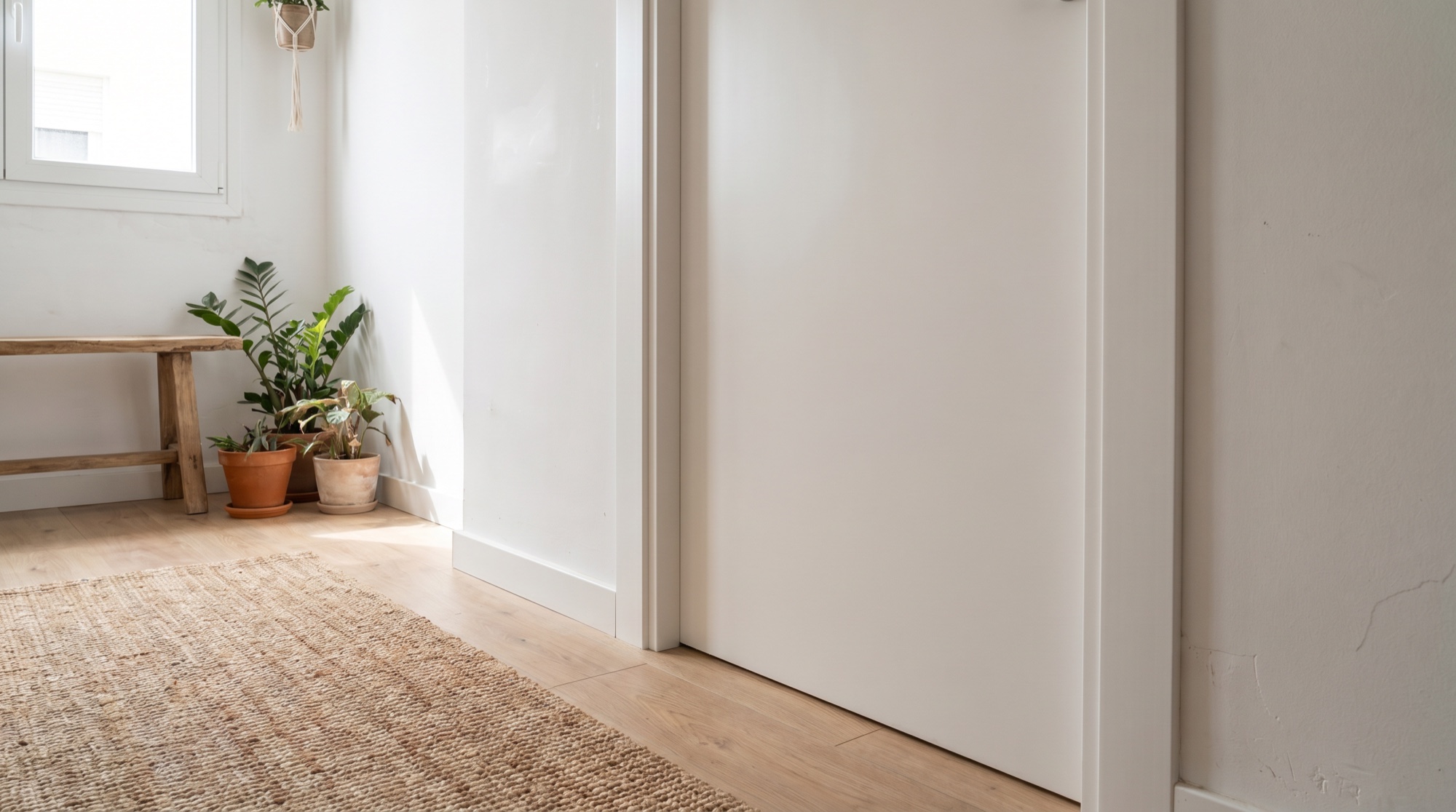
Door lacquering prices in Cádiz (2026)
| Door type | Price per door | Full flat (7 doors) |
|---|---|---|
| Flat (no mouldings) | €120–€160 | €840–€1,120 |
| With mouldings or panels | €150–€200 | €1,050–€1,400 |
| Double or large door | €200–€280 | — |
| Frames and architraves (per door) | €40–€70 | €280–€490 |
Prices include full sanding, priming, two coats of lacquer enamel (normally polyurethane) and door removal/refitting if lacquered in the workshop. Workshop lacquering (the door is taken away and returned in 5-7 days) gives a superior finish to on-site lacquering because the work is done horizontally and dust-free.
Workshop lacquering vs on-site lacquering
The difference between the two methods is not just aesthetic: it affects durability, the final finish and the price. In Cádiz, where Levante wind dust and humidity complicate drying, the difference is especially pronounced.
| Aspect | Workshop lacquering | On-site lacquering |
|---|---|---|
| Finish | Superior: no roller marks, no dust particles, uniform surface | Good but may have slight marks or particles if there is a draught |
| Durability | 15-20 years. Applied horizontally with controlled temperature and humidity | 10-15 years. Dried vertically, exposed to conditions in the flat |
| Timeframe | 5-7 days (door is removed and returned installed) | 1-2 days per door (work done in the flat itself) |
| Price | Same or slightly higher (+10-15%) | Base price |
| Drawback | You are without doors for 5-7 days | Solvent smell in the home for 2-3 days, risk of dust on the finish |
| Best for Cádiz | Yes: avoids humidity and Levante dust problems during drying | Only if the flat is under renovation and empty, preferably in winter |
In Cádiz we always recommend workshop lacquering. The average relative humidity of 70-80% and Levante episodes carrying suspended sand particles make on-site drying risky. In the workshop we control temperature and humidity, and the finish is flawless.
The lacquering process step by step
Professional lacquering is not simply painting the door. It is a multi-phase process where surface preparation is as important as the enamel application itself. Skipping a step or doing it poorly shows immediately: bubbles, peeling, grain marks and premature yellowing.
- Removal: doors, hinges, handles and hardware are removed. Each door is labelled for reinstallation in its original opening.
- Initial sanding (80-120 grit): old varnish, paint or veneer is removed down to clean wood. On doors with multiple paint layers, chemical stripper may be used before sanding.
- Repair: cracks, dents and old lock holes are filled with wood filler. Patches are sanded once dry.
- Sealing primer: a wood-specific primer coat is applied that seals the grain, improves enamel adhesion and prevents wood resin from staining the final finish.
- Fine sanding (220-320 grit): the primer is lightly sanded to remove any imperfections and create a perfectly smooth base.
- First coat of enamel: the first coat of polyurethane enamel is applied (spray gun in workshop, foam roller on site). Drying time 12-24 hours.
- Intermediate sanding (320-400 grit): the first coat is gone over to remove any dust particles or minor imperfections.
- Second coat of enamel: final coat that gives the definitive finish. Drying time 24-48 hours before handling.
- Reinstallation: doors are refitted with their original or new hardware, hinges are adjusted and the closing mechanism is checked.
Want to lacquer the doors in your flat in Cádiz? Request a no-obligation quote.
How the Cádiz climate affects lacquering
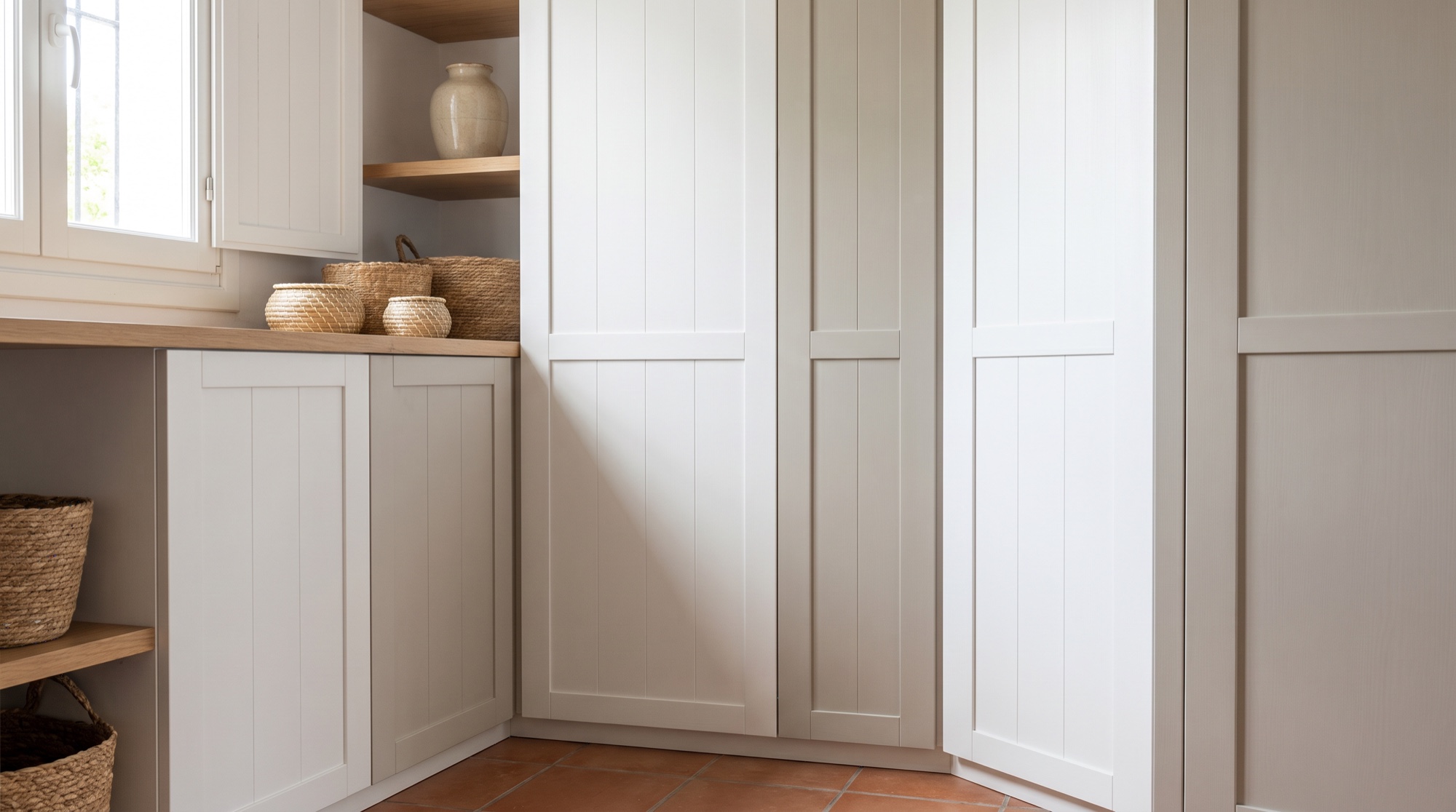
The Cádiz climate has three factors that directly affect door lacquering: Atlantic humidity, salt air and the Levante wind. Ignoring these factors is one of the most common mistakes when attempting to lacquer doors yourself or hiring someone without local experience.
- Humidity (70-80% average): slows enamel drying and can cause a whitish or unevenly matt finish. In neighbourhoods close to the sea (La Viña, El Pópulo, Santa María, Paseo Marítimo), humidity is even higher. Workshop lacquering with a controlled environment eliminates this risk.
- Salt air: salt particles in the air settle on damp surfaces. If the enamel has not dried completely, salt becomes trapped beneath the layer and causes blistering over time. In flats with cross-ventilation from the sea, this problem is genuine.
- Levante: the Levante wind carries fine dust and sand from inland. If it coincides with on-site door drying, particles adhere to the fresh enamel and ruin the finish. Levante days are frequent in spring and summer.
Lacquer or replace the doors?
A new factory-lacquered interior door costs between €250 and €500 (door + frame + installation). Lacquering an existing door costs €120–€200 (€160–€270 with frame). If your doors are solid and in good condition, lacquering saves 40-60% compared with replacing them and the result is equivalent. If the doors are hollow, warped or structurally damaged, replacing them is the better option.
Common mistakes when lacquering doors
- Not sanding the surface properly: this is the most serious mistake. If old varnish remains or the surface is not perfectly smooth, the enamel will not adhere and will peel within months.
- Skipping the primer: applying enamel directly onto bare wood or over a lightly sanded varnish layer gives an uneven and short-lived result. The sealing primer is essential.
- Using plastic paint instead of polyurethane enamel: plastic paint does not have the hardness or scratch resistance a door requires. It marks with knocks and yellows quickly.
- Lacquering vertically: when a door is painted in the vertical position (without removing it), the enamel tends to pool at the bottom forming drips. Horizontally it distributes evenly.
- Lacquering with the windows open on a Levante day: it seems logical to ventilate, but during Levante fine dust enters and ruins the finish. Better to close the windows and use a draught-free space.
- Not respecting drying times between coats: applying the second coat before the first has dried completely (minimum 12 hours) causes bubbles, wrinkling and a tacky finish.
When you should NOT lacquer doors
Lacquering is the best option in most cases, but there are situations where it is not worthwhile and replacing the door directly is more cost-effective.
- Low-quality hollow doors (cardboard honeycomb type): they do not tolerate deep sanding well and the end result is never comparable to a lacquered solid door.
- Doors with visible warping: if the door is bowed, twisted or does not close properly, lacquering will not fix the structural problem. It needs replacing.
- Doors with irreversible moisture damage: in ground-floor flats in the Cádiz old town, some doors have absorbed rising damp for decades. The wood is swollen, soft or has fungal growth. In these cases the door cannot be saved.
- Doors whose style does not fit the renovation: if you are doing a full renovation and the doors have a very dated design (classic panels, arches, heavy mouldings), you may prefer new doors in a contemporary design even though they cost more.
Factors that affect lacquering prices in Cádiz
- Door type: a flat door is lacquered faster than one with mouldings or panels, because mouldings require additional hand-brushing in corners and recesses.
- Surface condition: if the door has multiple layers of old paint or heavily degraded varnish, stripping and sanding take longer. This can add €20–€40 per door.
- Number of doors: the per-unit price drops when all the doors in the flat are lacquered at once. Setting up the workshop, mixing the colour and organising transport has a fixed cost that is spread across more units.
- Colour and finish: standard white is the most affordable colour. Dark colours (black, anthracite) require more coats for uniform coverage. Satin finish is the most common; matt requires extra treatment against fingerprints.
- Flat access: in old-town Cádiz flats (El Pópulo, La Viña, Santa María) without a lift and with narrow stairs, transporting doors to the workshop and back can add €50–€100 to the total budget.
Types of enamel for door lacquering
| Enamel type | Advantages | Drawbacks | Relative price |
|---|---|---|---|
| Polyurethane (solvent-based) | Very hard finish, high scratch and moisture resistance. Ideal for Cádiz. | Strong smell for 24-48 hours, requires ventilation | Medium |
| Water-based enamel (acrylic) | No odour, faster drying, lower environmental impact | Less scratch-resistant, may yellow sooner in humid climates | Medium-low |
| Polyester lacquer | Very high quality finish, the most durable. Used in premium kitchen furniture. | Only applicable in workshop with spray booth, higher price | High |
For interior doors in Cádiz, we recommend solvent-based polyurethane enamel for its moisture resistance. Water-based enamel is a good alternative if someone in the household is sensitive to smells, but in coastal areas like La Viña or the Paseo Marítimo, polyurethane offers clearly superior protection against salt air.
Tip: if you are renovating the flat, ask for a quote to lacquer the doors at the same time. We take advantage of the empty property to work faster and without access restrictions.