Double or Triple Glazing: Which Should You Choose for Your Home in Cádiz?
When you replace your windows, one of the most important decisions is the type of glazing. The glass accounts for between 70% and 80% of the window's surface area, so its quality has a greater impact on insulation than the frame itself. In Cádiz, where intense summer heat, urban noise and coastal humidity are constant factors, choosing the right glass makes a real difference to your electricity bill and daily comfort.
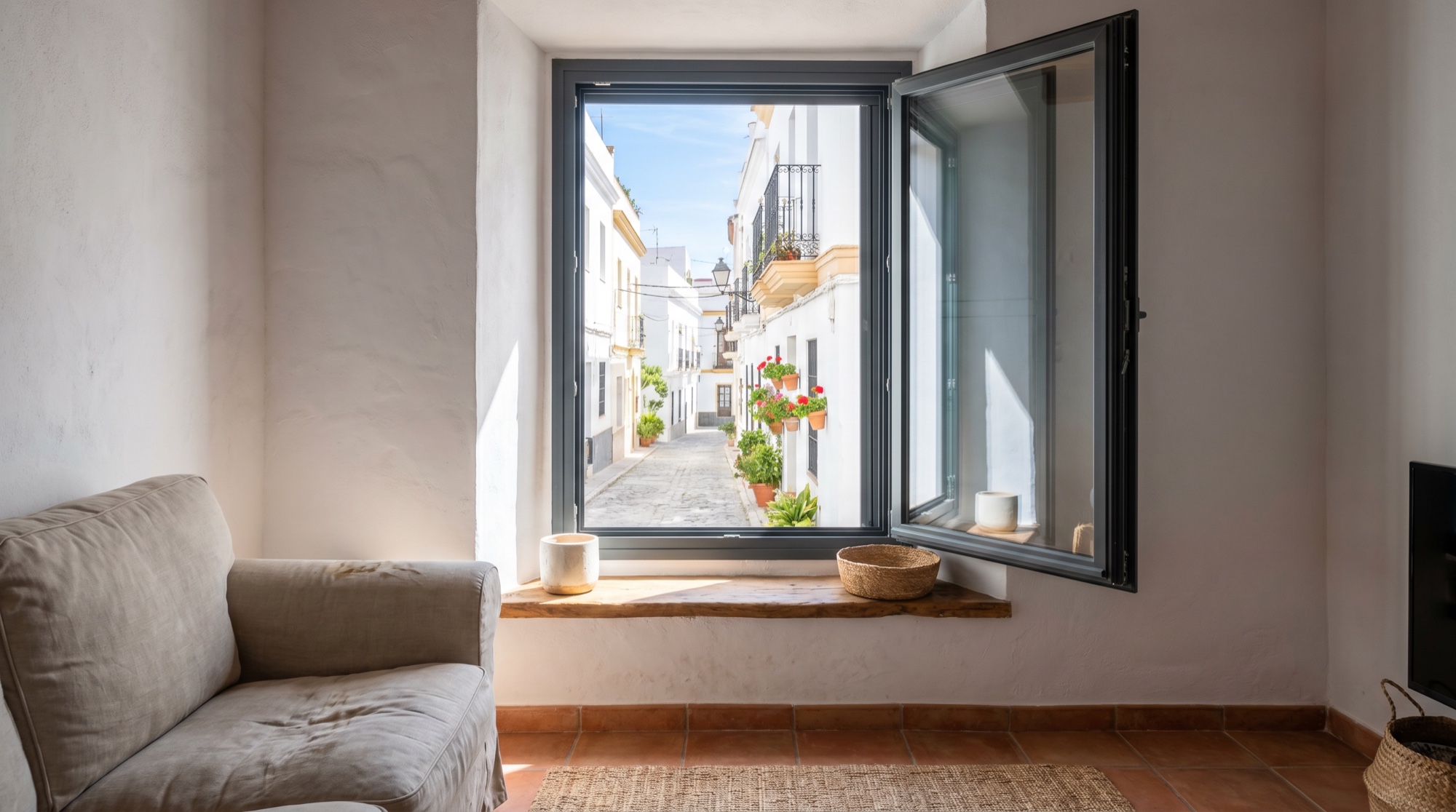
What is double and triple glazing?
Double glazing consists of two panes of glass separated by an air or gas cavity (usually argon) of 12–20 mm. This cavity acts as thermal and acoustic insulation. It is the current standard across Europe and the minimum required by the Spanish Building Code (CTE) for new construction.
Triple glazing adds a third pane and a second gas cavity, tripling the insulating barrier. The result is a glass U-value that can drop below 1.0 W/m²K (compared with 1.1–1.4 for double), which translates into an additional 10–20% reduction in energy losses. However, it is also heavier, thicker (40–48 mm vs 24–32 mm) and costs significantly more.
Comparison: double vs triple glazing in Cádiz
| Factor | Double glazing | Triple glazing |
|---|---|---|
| Glass U-value | 1.1–1.4 W/m²K | 0.5–0.8 W/m²K |
| Acoustic insulation | 30–38 dB | 35–42 dB |
| Weight per m² | 20–25 kg | 30–40 kg |
| Total thickness | 24–32 mm | 40–48 mm |
| Additional cost per window | Reference | +€60–120 |
| Payback in Cádiz | — | 10–15 years |
Price per window: double vs triple glazing
| Window type (1.2 x 1.2 m) | With double glazing | With triple glazing | Difference |
|---|---|---|---|
| PVC tilt-and-turn | €350–500 | €420–620 | +€70–120 |
| TB aluminium tilt-and-turn | €400–600 | €470–720 | +€70–120 |
| PVC lift-and-slide (2 m) | €1,200–1,800 | €1,350–2,000 | +€150–200 |
| TB aluminium sliding (2 m) | €1,000–1,600 | €1,120–1,800 | +€120–200 |
For an average flat in Cádiz with 6 tilt-and-turn windows, the total difference between double and triple glazing is €420–720. It is not a huge amount, but it needs to be set against the real energy savings it delivers in our climate.
Cavity gas: argon vs krypton
The cavity between the glass panes is filled with an inert gas that reduces thermal transmission by convection. Argon is the standard: it reduces the U-value by 15–20% compared with air and has a marginal cost (barely €3–5 per window). Krypton is 40% better as an insulator than argon, but costs 10 times more. It is used in premium configurations where the total glazing thickness needs to be reduced (10–12 mm cavities instead of 16–20 mm) without losing thermal performance.
For homes in Cádiz, argon is sufficient in all cases. Krypton only makes sense in Passivhaus projects with very narrow profiles that cannot accommodate wide cavities, something extremely rare in our area.
Low-emissivity coatings (Low-E): the invisible upgrade
Low-emissivity coatings are nanometric layers of metallic oxides applied to the glass surface. They reflect up to 95% of infrared radiation (radiant heat), acting as an invisible thermal shield. In a double glazing unit, a Low-E coating on the inner face of the outer pane reduces the overall U-value from 2.8 W/m²K (without coating) to 1.1–1.4 W/m²K. It is the upgrade with the best cost-benefit ratio: it delivers nearly as much improvement as adding a third pane, but for just €15–25 more per window.
In Cádiz, where the main summer problem is solar heat entering through windows, we recommend the combination of Low-E coating with solar control. Solar control glass has an additional layer that reflects part of the visible and infrared solar radiation, reducing solar gain by 40–60% without noticeably darkening the home. This combination is more effective in Cádiz than triple glazing for reducing air conditioning bills.
Want advice on the best glazing for your home in Cádiz? Request a no-obligation quote.
Real energy savings: double vs triple in the Cádiz climate
Cádiz has mild winters (average January temperature: 12 °C) and hot summers (August average: 26 °C, with frequent peaks of 35–40 °C). The main energy expense is air conditioning in summer, not heating in winter. This climate reality completely changes the payback calculation for triple glazing compared with cold climates in northern Europe.
| Item | Double Low-E + solar control | Triple Low-E |
|---|---|---|
| Glass U-value | 1.1–1.3 W/m²K | 0.5–0.8 W/m²K |
| Solar factor (g) | 0.25–0.35 | 0.35–0.50 |
| Heating savings (winter) | Reference | +5–10% |
| AC savings (summer) | Greater (better solar control) | Lower (higher g factor) |
| Estimated annual saving (80 m² flat) | €200–350 | €220–370 |
The key figure is the solar factor (g): it measures how much solar energy the glass lets through. A low g factor (0.25–0.35) in double glazing with solar control blocks more summer heat than standard triple glazing, whose g factor tends to be higher (0.35–0.50). This means that, paradoxically, good double glazing with solar control can save more on air conditioning than triple glazing without it.
When is triple glazing worthwhile in Cádiz?
Cádiz's climate is mild in winter (rarely drops below 8 °C) and very hot in summer. In this context, the additional benefit of triple glazing over double is modest: the extra energy saving is around 5–10% per year, which on an average bill of €1,000 per year means €50–100. With an added cost of €60–120 per window (€360–720 for a flat with 6 windows), the payback stretches to 10–15 years.
Double vs. triple glazing at a glance
Double glazing
- Two panes, one cavity
- U-value 1.1-1.4 W/m²K
- Enough for most of Cádiz
- Lighter and slimmer
Triple glazing
- Three panes, two cavities
- U-value 0.5-0.8 W/m²K
- +€60-120 per window
- Heavier and thicker
That said, there are specific situations where triple glazing does make sense in Cádiz:
- Homes with facades heavily exposed to noise (main avenues, nightlife areas in the centre): the 5–7 dB acoustic improvement from triple glazing is noticeable.
- Projects with Passivhaus or NZEB certification: the thermal transmittance requirements demand triple glazing.
- High-specification homes where the added cost is marginal relative to the total budget and maximum comfort is sought.
Why is triple glazing unnecessary in most Cádiz homes?
In cold climates like Germany or Scandinavia, triple glazing is standard because winter temperatures can drop to -10 or -20 °C for months. Under those conditions, every tenth of a W/m²K improvement in U-value translates into significant energy savings. In Cádiz, the average winter temperature is around 12 °C and the coldest nights barely drop below 5 °C. The insulation difference between double (U = 1.1–1.4) and triple (U = 0.5–0.8) barely translates into noticeable heating savings.
In addition, triple glazing has practical drawbacks: it weighs 50–60% more than double (30–40 kg/m² vs 20–25 kg/m²), which demands sturdier hardware and can limit the maximum leaf size. In standard PVC profiles, a triple-glazed leaf should not exceed 1.3 m in width to avoid long-term deformation. It is also thicker (40–48 mm), which can be a problem in windows of older Cádiz buildings where the opening cannot accommodate very wide profiles.
Interaction between glazing and frame material
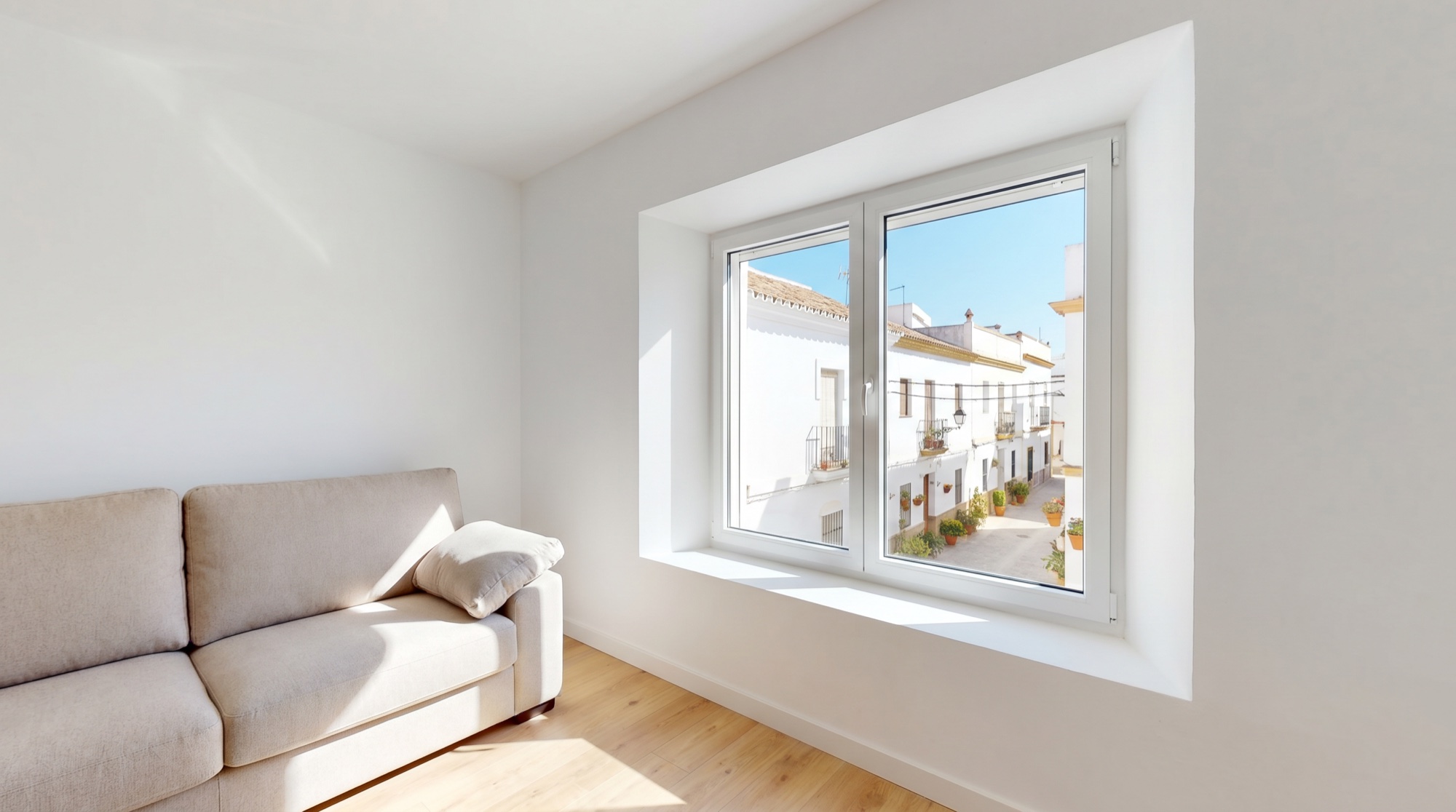
Glazing performance also depends on the frame that holds it. An excellent triple glazing unit mounted in an aluminium frame without thermal break loses much of its advantage because the frame itself becomes a thermal bridge. Conversely, a good multi-chamber PVC profile or high-end TB aluminium makes the most of the glass's potential.
- Multi-chamber PVC (5–7 chambers): the material with the best natural thermal insulation. Ideal for combining with any glazing. Handles double and triple without issues in standard sizes.
- High-end TB aluminium (24–34 mm polyamide): thermal performance comparable to PVC, with the advantage of slimmer profiles and greater load capacity for heavy glass. Recommended for triple glazing in large windows.
- Standard TB aluminium (12–16 mm): sufficient for double glazing, but does not exploit the full potential of triple. If you are going to invest in triple glass, invest in a higher-specification profile as well.
For all other homes in Cádiz, good double glazing with low-emissivity solar control glass is the smartest option. Invest the price difference in higher-quality glass (latest-generation low-emissivity, 16–20 mm argon gas cavity) rather than adding a third pane.
Our recommendation for Cádiz: double glazing with low-emissivity solar control glass in 4+4/16 argon/6 configuration. If you need extra acoustic insulation, add an acoustic laminated pane (6+6/16/4) instead of triple glazing, it is more effective against noise and more cost-effective.