Vinyl vs Porcelain Flooring: Which to Choose for Your Renovation in Cádiz
If you're thinking about renovating your flat in Cádiz, one of the first decisions you'll need to make is which type of flooring to go with. And this is where the question we hear from practically every client comes up: vinyl versus porcelain, which do I choose? Both are solid options, but each has its place. In this guide we give you everything you need, real prices, timescales, how each performs in the Cádiz climate, so you can make an informed decision with no nasty surprises.
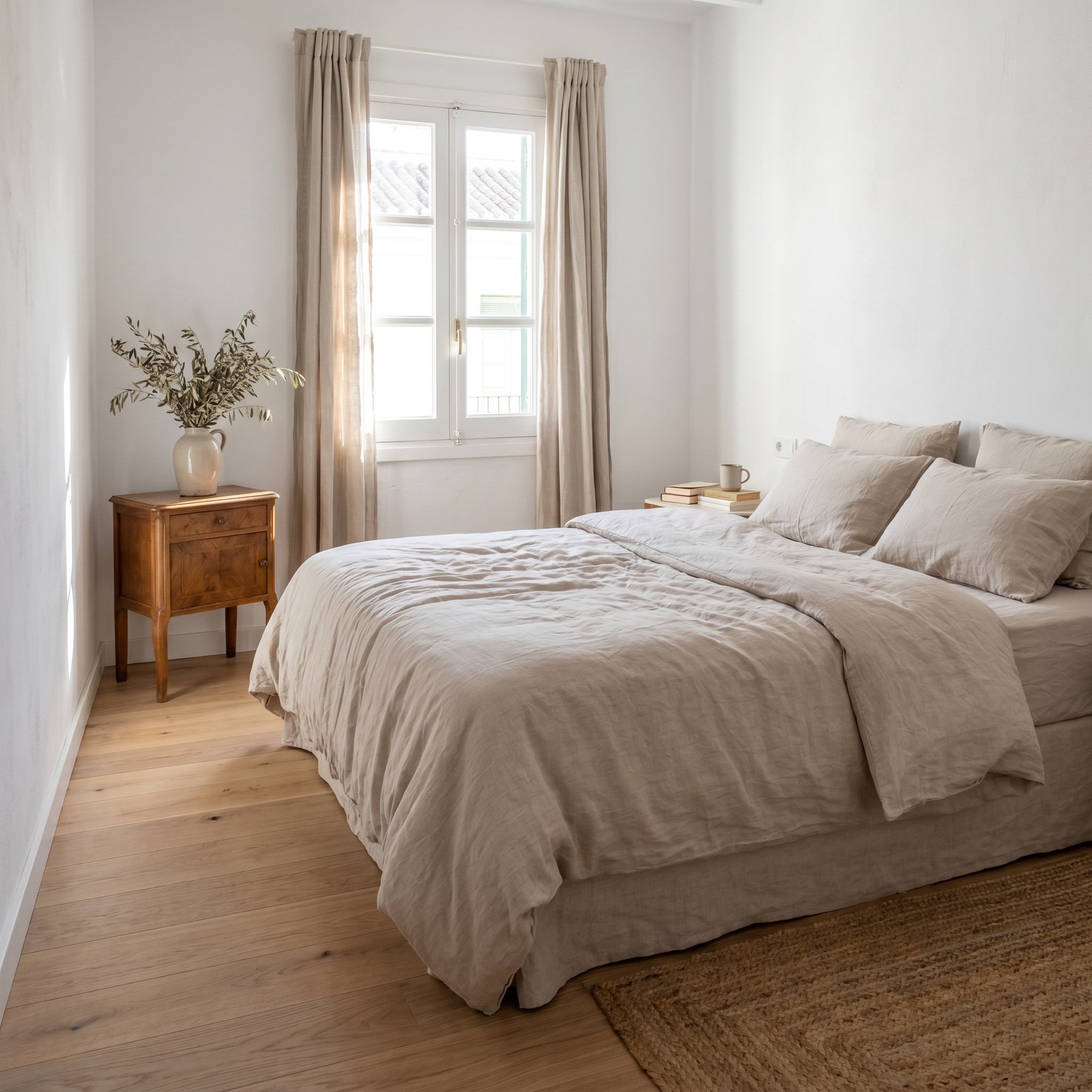
What is vinyl flooring and when does it make sense to install it?
Vinyl flooring is a synthetic floor covering made up of several layers of PVC, with a decorative top layer that mimics wood, stone or concrete with increasingly convincing realism. It comes in tiles, planks or rolls, and its thickness ranges from 2 to 8 mm depending on the range. The most common formats in renovation work are SPC (Stone Plastic Composite) and LVT (Luxury Vinyl Tile) planks, which incorporate a rigid core that improves dimensional stability and impact resistance.
Vinyl flooring makes sense when you want a quick renovation with as little disruption to daily life as possible. It's the preferred choice for those who want to change their floors without any building work in Cádiz, as many formats are installed using a click system directly over the existing floor, with no demolition and no rubble to deal with. It's also a sensible choice for rental properties, second homes, or partial renovations where the budget is the deciding factor.
What is porcelain and why does it dominate renovations in Cádiz?
Porcelain stoneware is a ceramic tile fired at temperatures above 1,200 °C, which gives it a water absorption rate of less than 0.5% and exceptional hardness. It's manufactured in formats ranging from the classic 60×60 cm to large slabs of 120×260 cm, with finishes that replicate marble, wood, concrete or natural stone. In Cádiz, porcelain has been the go-to choice for full renovations for decades, and it's no coincidence.
The Cádiz climate, with long summers that regularly exceed 35 °C, high relative humidity for much of the year, and the constant salt-laden sea breeze in coastal areas, demands a floor that won't warp, won't absorb moisture, and won't fade in the sun. Porcelain ticks every single box. On top of that, its thermal mass makes it wonderfully pleasant in summer: the floor stays cool underfoot, something any local will appreciate when July rolls around. That's why, when it comes to full renovation flooring in Cádiz, porcelain remains the benchmark.
Price comparison: vinyl vs porcelain in Cádiz
Price is, naturally, one of the most important factors. Let's break it down with real figures from the Cádiz market in 2025–2026, including materials and installation. Bear in mind that these ranges reflect mid- to high-quality products; entry-level options can be cheaper, but we wouldn't recommend them for a renovation you want to last.
| Item | Vinyl flooring SPC/LVT | Porcelain stoneware |
|---|---|---|
| Materials (€/m²) | €18–€35 | €20–€55 |
| Installation (€/m²) | €8–€14 | €18–€28 |
| Removal of existing floor | Not required (laid on top) | €10–€15/m² |
| Indicative total cost (€/m²) | €26–€49 | €48–€98 |
| 70 m² flat (total estimate) | €1,820–€3,430 | €3,360–€6,860 |
| Skirting boards (€/linear metre) | €3–€6 | €5–€12 |
As you can see, the difference in price between vinyl and porcelain flooring in Cádiz is significant, particularly once you factor in labour and removal of the old floor. In a 70 m² flat, choosing vinyl can mean a saving of between €1,500 and €3,400 compared with porcelain. That said, there are nuances to that saving which we'll explore in the sections below, because the price per square metre doesn't tell the whole story.
Durability and resilience: which holds up better against the climate and daily use?
When it comes to durability, the difference between vinyl and porcelain is clear-cut. A good-quality porcelain tile, properly installed, can last over 30 years without losing any of its properties. It resists scratches, chemicals, sudden temperature changes and heavy footfall. Its PEI rating (abrasion resistance) typically falls between 3 and 5, making it suitable even for commercial settings. Against the humidity and salt air so prevalent in Cádiz, porcelain is virtually impervious.
Vinyl vs. porcelain at a glance
Vinyl flooring
- Cheaper: €26-49/m²
- Installed in 1-2 days
- Laid over existing floor
- 10-20 year lifespan
Porcelain
- Pricier: €48-98/m²
- 5-10 day installation
- Immune to sun, salt and heat
- Lasts over 30 years
Good-quality vinyl flooring (SPC with a wear layer of 0.5 mm or more) has an estimated lifespan of 10 to 20 years in residential use. It's resistant to surface water and stains, but it doesn't cope as well with prolonged exposure to intense heat or direct sunlight. In a south-facing living room in Cádiz, with direct sun for several hours a day during summer, a mid-range vinyl can suffer slight expansion or discolouration over time. High-end ranges include UV protection, but they still can't match the absolute stability of porcelain.
- Porcelain: lifespan of 30+ years, maximum scratch resistance (PEI 4–5), immune to humidity and sea salt, will not fade in the sun.
- SPC vinyl: lifespan of 10–20 years, good scratch resistance (wear layer 0.3–0.7 mm), resistant to surface water but sensitive to extreme heat and prolonged direct sunlight.
- In high-traffic areas (hallways, entrance halls), porcelain holds up better over the long term.
- For second homes or rental properties with regular turnover, vinyl offers a more than reasonable cost-to-lifespan ratio.
Vinyl or porcelain? Get in touch and we'll help you choose the perfect flooring for your renovation in Cádiz.
Installation and building work: timescales, noise, and whether it can be laid over existing flooring
This is where vinyl wins hands down. Installing vinyl flooring over an existing floor is perfectly viable, provided the base is level and in good condition. SPC planks with a click system are laid as a floating floor, without adhesive, which means zero rubble and an installation time of just one to two days for a 70 m² flat. You can stay in the property throughout, and the noise is minimal. It's the ideal solution if you genuinely want to change your floors without any building work in Cádiz.
Porcelain requires a more involved installation. The existing floor must be removed (unless you opt to lay over it using special thin-bed adhesives, something that isn't always advisable), the base must be prepared with a levelling compound, and the tiles must be set with tile adhesive and grouted. The process takes between 5 and 10 working days for an entire flat, generates dust and rubble, and typically means you'll need to vacate the property during the work. In a full renovation in Cádiz this rarely poses a problem, since you're already overhauling the whole house, but if you only want to change the floor, the disruption is considerable.
Practical tip: if your flat has terrazzo or hydraulic tiles in good condition and you want to refresh the look without getting into major works, SPC vinyl with a click system is your best bet. We can lay it in 1–2 days, with no dust, no rubble, and no surprises. Do make sure, however, that the base floor has no uneven spots greater than 2 mm per linear metre, if it does, levelling will be needed first. At Reformas By Bianca we offer a no-obligation preliminary inspection.
Maintenance and cleaning: which is easier to look after in the long run?
Both floors are easy to maintain, though with some differences worth noting. Vinyl flooring can be cleaned with a well-wrung damp mop and a neutral cleaning product. It needs no treatments or polishing. You should avoid abrasive products, solvents, and dragging heavy furniture without felt pads, as these can scratch the surface layer. Stains from oil, wine or coffee come off easily if you act quickly.
Porcelain is even more forgiving. It stands up to virtually any cleaning product, won't stain (provided it has a rectified finish and well-sealed grout lines), and its surface doesn't degrade with use. The only thing to keep an eye on is the grout: in kitchens and bathrooms it's worth sealing it with a specialist product from time to time to prevent dirt build-up. In outdoor areas or on terraces, anti-slip porcelain requires slightly more frequent cleaning because its textured surface holds onto dust more readily.
Which option suits each room: kitchen, bathroom, living room and terrace
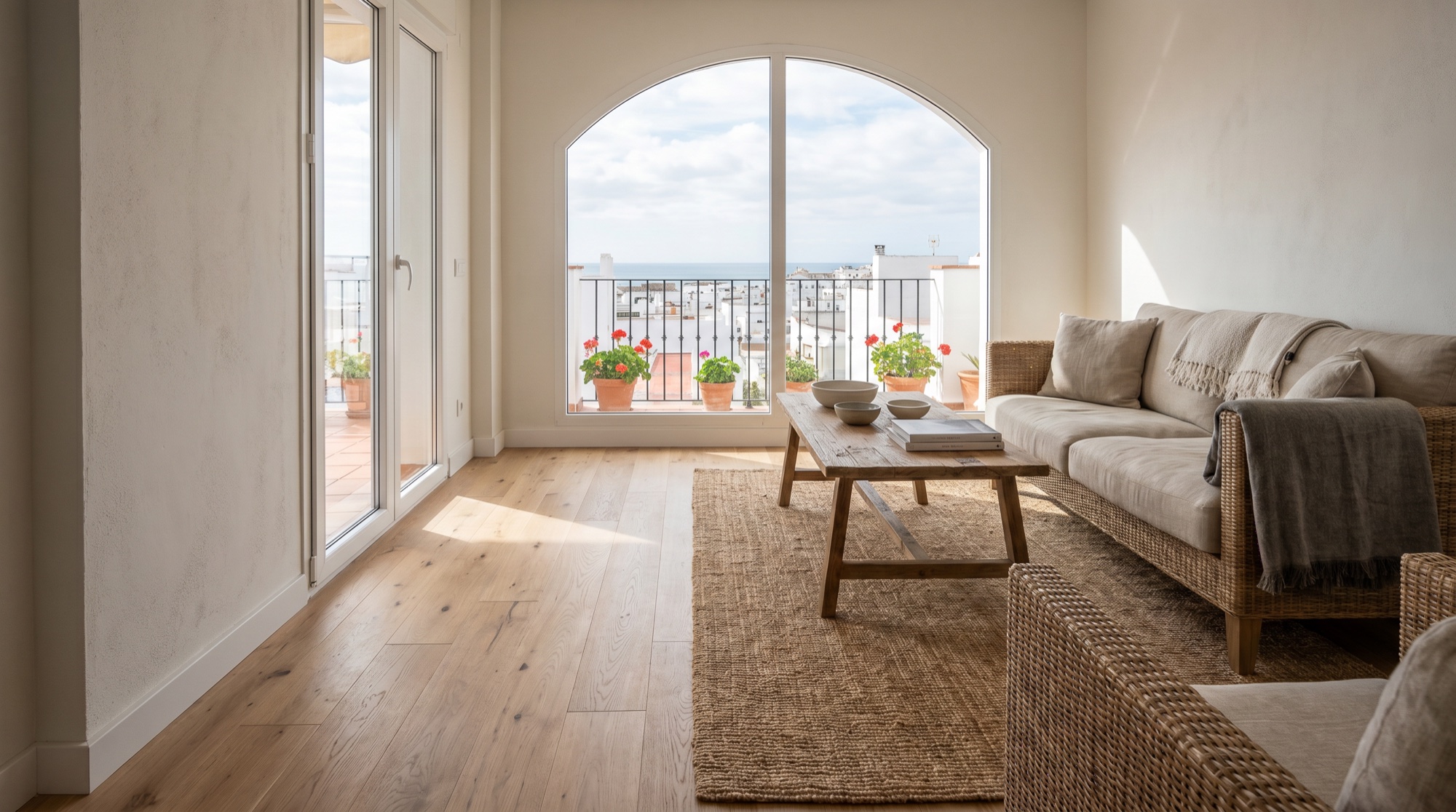
There's no such thing as a perfect floor for every room in the house. The smart approach is to think room by room, because each one has different demands. Here are our recommendations, based on years of renovation work in homes across Cádiz.
For the kitchen, the question of porcelain versus vinyl has a clear answer: porcelain. It's the area that gets mopped the most, where heavy objects get dropped (pans, pots), and where the floor has to withstand temperature changes from the heat of the hob. Porcelain handles all of that without breaking a sweat. Vinyl can work in kitchens with moderate use, but a heavy impact or a hot object falling on it can leave a permanent mark.
In the bathroom, the situation is similar. Whether to go with porcelain or vinyl comes down to the type of renovation: if it's a full strip-out, porcelain without question, with an anti-slip finish (class C2 or above). If you want a quick floor refresh without touching the shower tray or sanitary ware, SPC vinyl with an anti-slip treatment is a valid alternative and far quicker to install.
The living room and bedrooms are where vinyl comes into its own. This is where its comfort really shows: it's warmer underfoot, quieter to walk on, and visually it can mimic wood with a very convincing finish. If you don't have large pets or particularly heavy footfall, vinyl in these rooms will give you an excellent result at a noticeably lower cost.
For terraces and outdoor areas, porcelain is the only sensible option. Vinyl flooring is simply not designed for continuous direct exposure to sun and rain. An outdoor porcelain tile with an anti-slip finish (class R11 or above) and a thickness of 20 mm is what we typically install on terraces and patios throughout Cádiz.
Final verdict: how to decide based on your renovation and budget
If you're planning a full renovation in Cádiz, where the entire property is overhauled, the services are updated, and you're starting from scratch, porcelain is the most cost-effective investment in the long run. Its durability, its resilience to the Cádiz climate, and its versatility across every room (including outdoors) justify the price difference. It's the best flooring for a full renovation in Cádiz when you're after a result that will last for decades.
If your budget is tight, if you want to refresh the look of your home without embarking on major works, or if you need a solution for a rental property or second home, vinyl flooring in Cádiz is a smart choice. It lets you transform a flat in one to two days, with no rubble, a modern finish, and at a cost that can be half that of porcelain. That said, always go for mid- to high-range (SPC with a minimum 0.5 mm wear layer) and steer clear of budget options from large DIY chains that won't survive two Cádiz summers.
At Reformas By Bianca we work with both materials every day and know firsthand how they perform in homes across Cádiz, Chiclana, El Puerto, San Fernando, and the whole of the Bay. If you're not sure which flooring is right for your situation, pop into our studio or drop us a message: we'll give you honest, no-obligation advice and put together a detailed quote for the flooring types best suited to your project in Cádiz.