Home Renovation Trends 2026 in Cádiz: What Homeowners Are Requesting This Season
Every season brings something new to the world of home renovation, but 2026 is proving to be a genuine turning point in Cádiz. The surge in residential refurbishment across the historic quarter, European funding for energy efficiency, and a generation of homeowners who want considered interior design in their Cádiz renovations without sacrificing practicality have completely transformed what people are asking for when they request quotes. At Reformas By Bianca we have spent months watching tastes evolve, and in this guide we tell you exactly what is on trend for renovations in 2026, what genuinely warrants the investment, and what is worth approaching with caution before you commit.
Why 2026 is a pivotal year for renovating in Cádiz
Cádiz is experiencing a unique moment for renovation. The combination of EU Next Generation funds (which subsidise up to 40% of energy-efficiency works) and interest rates that have stabilised at around 3.2% for renovation loans has sent demand soaring. In the province alone, the Colegio de Arquitectos recorded an 18% increase in minor works permits during the first quarter of 2026 compared to the same period the previous year.
Add to this the typical profile of housing stock in Cádiz: flats of between 60 and 90 square metres, many built in the 1970s and 80s, with installations that have long since exceeded their useful lifespan. Renovating today is not merely an aesthetic choice, it is a matter of electrical safety, energy saving and increasing property value. A full renovation in Cádiz city can add between 15% and 25% to a property's value, according to data from property portals active in the area.
The Cádiz climate also plays a significant role in decision-making. The intense heat from May to October and the coastal humidity mean you need to choose specific materials and solutions that simply would not work the same way in Madrid or Barcelona. This is why renovation trends in Cádiz in 2026 have their own distinct character, one that is worth understanding before you simply copy what you see on Pinterest or Instagram.
The most popular kitchens in Cádiz in 2026: open-plan, bespoke and handle-free
When it comes to kitchen renovation trends in Cádiz, there is a clear winner this year: the open-plan kitchen running into the living room, with an island or peninsula. In flats of 70–90 m² it is the solution that creates the greatest sense of space, and the one our clients request most often, particularly young couples and families buying their first home in neighbourhoods such as Bahía Blanca, Loreto or the Segunda Aguada area. The average cost of opening a kitchen into the living room, including knocking through the partition wall, structural reinforcement where necessary, plumbing and electrics, ranges from €4,500 to €7,000 for the building work alone, not including the units.
The handle-free system (also known as push-to-open or integrated gola rail) has firmly established itself as the most sought-after finish in modern Cádiz renovations in 2026. Flat-fronted units in matt lacquer, particularly in sage green, mole grey and off-white, dominate the quotes we write. Matt lacquer has a real practical advantage in Cádiz: it disguises fingerprints and limescale from the water far better than a gloss finish, something any local will appreciate immediately.
For worktops, large-format sintered porcelain (brands such as Dekton or Neolith) has almost entirely displaced granite and is steadily gaining ground on Silestone. Its resistance to heat, stains and scratches makes it ideal for kitchens that see serious cooking. The price of a sintered worktop, installed, sits at around €120–180 per linear metre, compared with €80–120 for compact quartz.
| Element | Budget option | Mid-range option | Premium option |
|---|---|---|---|
| Full kitchen (units + worktop + appliances) | €6,000 – €9,000 | €10,000 – €16,000 | €17,000 – €28,000 |
| Worktop (per linear metre) | Granite: €70 – €100 | Compact quartz: €90 – €130 | Sintered: €130 – €190 |
| Opening kitchen into living room (building work) | €4,500 | €5,500 – €6,500 | €7,000 – €9,000 |
| Handle-free system (fronts) | Aluminium gola: €45/lm | Mechanical push: €65/lm | Electric push: €95/lm |
Bathroom trends 2026: spa effect, screens and wet-room showers
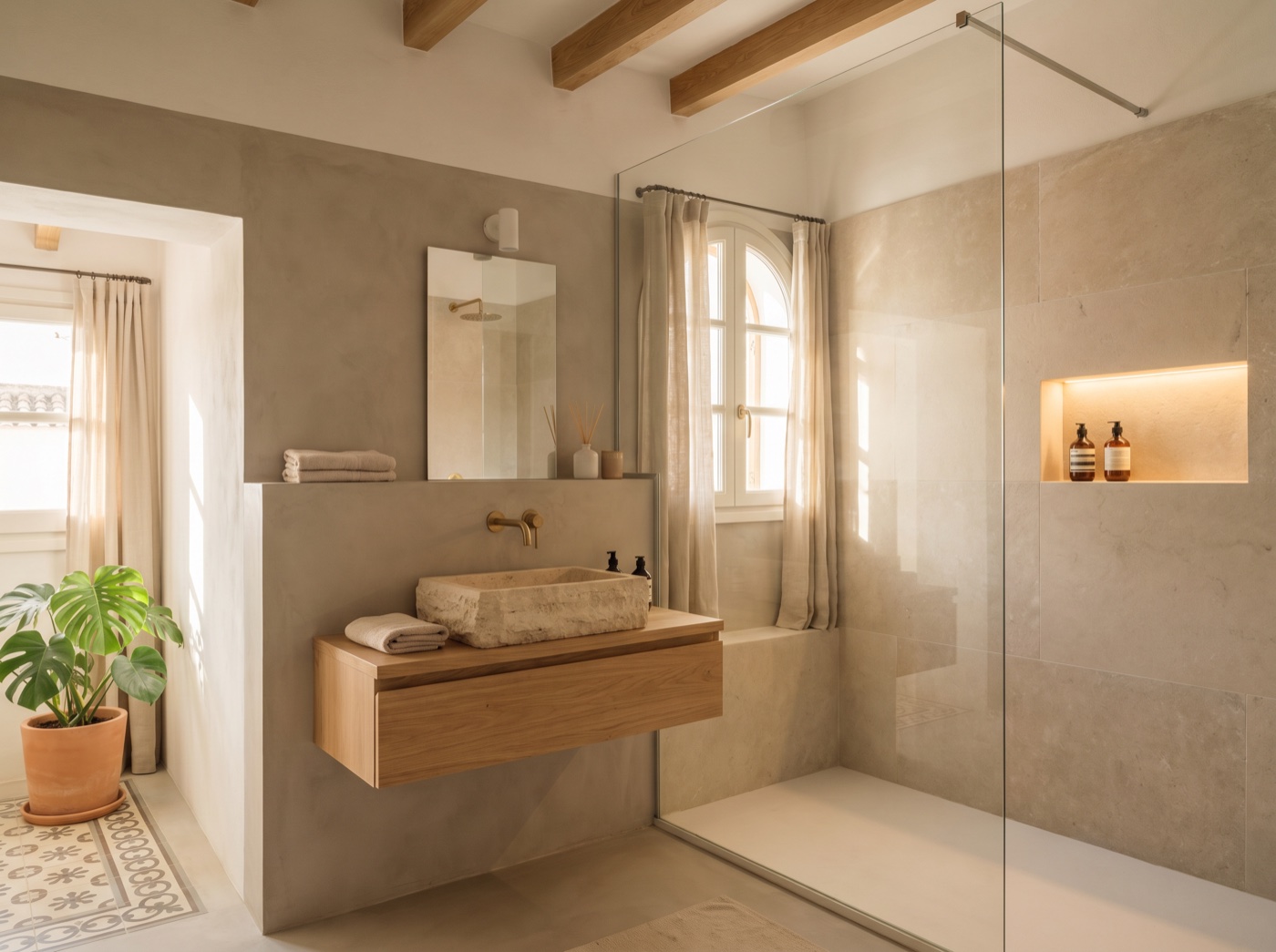
Bathroom renovation trends in Cádiz in 2026 revolve around one central idea: turning the bathroom into a small spa. In practice, this means flush-to-floor wet-room showers with a continuous resin or porcelain tray, fixed tempered-glass shower screens with no visible framing, and recessed brassware in matt black or brushed gold. A built wet-room shower with a linear drain (including waterproofing and tiling) typically comes in at between €1,800 and €3,200, depending on size and materials.
The bath has not disappeared, but it has evolved. In homes with two bathrooms, many clients choose to keep a freestanding or semi-recessed bath in the master bathroom as a design feature, while converting the second bathroom into a wet-room shower. Freestanding oval baths in solid surface start at around €1,200 and can exceed €3,500 for designer models.
One detail that makes all the difference in Cádiz bathrooms in 2026: indirect lighting with LED strips behind the mirror and in the shower niches. It is a straightforward change costing €300–600 per bathroom, yet it completely transforms the atmosphere. Floating bathroom furniture in a natural wood or matt lacquer finish remains the firm favourite, with soft-close drawers now a non-negotiable standard rather than an upgrade.
On-trend materials: microcement, large-format porcelain and luxury vinyl
If there is one material that defines home renovation in 2026, it is microcement. In Cádiz it has become the go-to surface finish for bathrooms, kitchens and living room floors, and for good reason. Its seamless, joint-free finish creates a sense of space that is perfect for smaller flats. What is more, properly applied with the right sealing coats, it stands up to coastal humidity without any issues. In Cádiz in 2026, microcement is being used predominantly in sand, pearl grey and bone white tones, with an average application cost of €55–85/m² on walls and €70–100/m² on floors, including primer and sealant.
Large-format porcelain (tiles of 120×60 cm or even 120×120 cm) is the second major material trend. Fewer grout lines mean less maintenance and a cleaner, more contemporary look. The most requested finishes are limestone effect, cement effect and Calacatta marble. For properties on the seafront or in areas with high salinity, porcelain has a decisive advantage over natural materials: it is entirely unaffected by salt and moisture.
SPC luxury vinyl (Stone Polymer Composite) has carved out a serious place in renovation projects with tighter budgets and in holiday rental properties. It is laid directly over the existing floor, which means no need to rip up the old surface, a saving of €1,500–3,000 in an average-sized flat. Good-quality SPC vinyl, installed with skirting boards, costs around €28–42/m², and its waterproof nature makes it suitable throughout the entire home, including bathrooms and kitchens.
Practical tip: if your property is close to the sea (Paseo Marítimo, Santa María del Mar, La Caleta), avoid porous materials such as natural marble or untreated solid wood in exposed areas. The salt air deteriorates them within a few years. Sealed microcement, porcelain and SPC vinyl are the most durable options for the Cádiz coastline.
Want a renovation with the latest trends? Tell us about your project and we'll give you a free quote.
Colours and finishes dominating Cádiz renovations this year
The colour palette for Cádiz renovations in 2026 has taken an interesting turn. Neutral bases remain (warm whites, greiges and sandy tones) but the accent notes are now muted greens (sage, olive, forest) and deep blues (teal, indigo), colours that chime naturally with the Cádiz landscape of sea and countryside. In kitchens, sage green has become the colour of the year for cabinet fronts, while in living rooms warm earthy tones and soft terracotta are gaining ground on feature walls.
Matt finishes continue to reign over gloss on almost every surface: paint, brassware, furniture and cladding. Matt black brassware and bathroom accessories retain their prominence, but the standout newcomer of 2026 is brushed gold and aged bronze as a warmer alternative. In ironmongery and handles, unlacquered brass is on the rise, bringing a crafted, artisanal feel that sits particularly well in properties in the old quarter of Cádiz, El Puerto de Santa María or Sanlúcar de Barrameda.
One combination we are seeing more and more in Cádiz home renovation styles: natural oak-toned floors paired with white walls and colour-lacquered joinery. It is a simple, light-filled and timeless formula that works equally well in a penthouse in Puerta Tierra and a terraced house in Chiclana. Steer clear of overly risky trends for elements that are hard to change (floors and tiling) and save the on-trend colours for paint, textiles and accessories.
Energy-efficient renovations on the rise: windows, insulation and underfloor heating
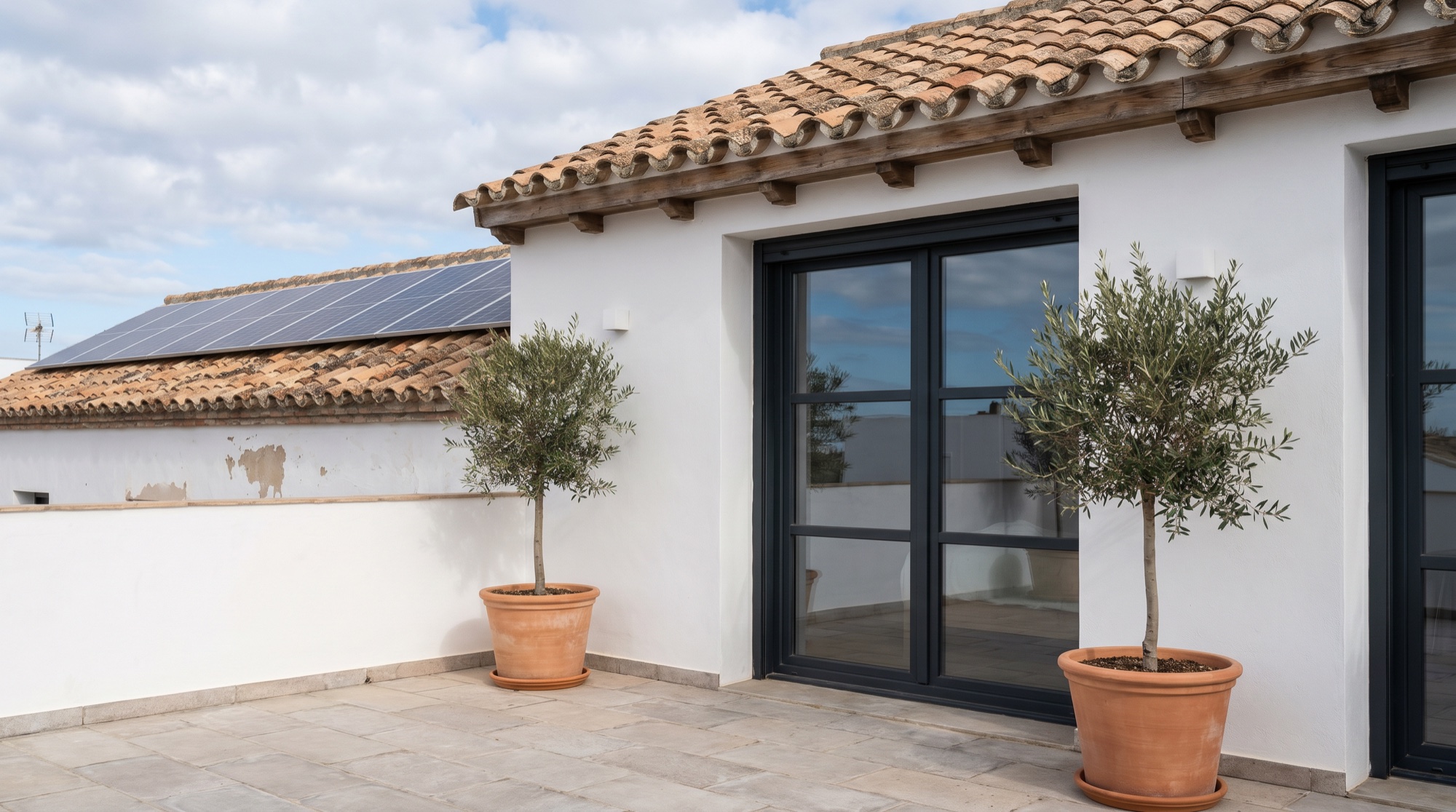
Sustainable renovation in Cádiz in 2026 is not a passing trend, it is an economic necessity. With electricity prices fluctuating between €0.15 and €0.22/kWh and summers growing ever longer and hotter, every euro invested in energy efficiency pays back sooner. Replacing windows with thermally broken aluminium frames and low-emissivity glass is the measure with the best return on investment: it reduces energy loss by 30–40% and dramatically improves acoustic comfort, something that matters greatly on the narrow streets of the city centre.
The average cost of replacing all the windows in an 80 m² flat in Cádiz (typically five to seven windows) ranges from €4,000 to €8,500, depending on the material (thermally broken aluminium or PVC) and the opening type. With Next Generation grants, the owner can recoup between 30% and 40% of the cost as a direct subsidy, making this one of the most cost-effective renovations available right now.
Cooling underfloor heating is another growing trend in full renovations. It works as heating in winter and as gentle cooling in summer by circulating chilled water. In Cádiz, where winters are short but summers feel endless, the cooling function is particularly valuable. Installation costs around €45–65/m², and it requires a full floor renovation, so it makes sense to plan it whenever you are already replacing the floor finish. Combined with an air-to-water heat pump, energy consumption can be reduced by up to 60% compared with a conventional split-unit system.
- Thermally broken frames with low-emissivity glass: 30–40% saving on heating and cooling
- Blown-in cavity wall insulation: €15–25/m², no visible building work
- Air-to-water heat pump (aerothermal): €4,500–8,000 installed, eligible for subsidy
- Cooling underfloor heating: €45–65/m², ideally combined with a heat pump
- Ceramic thermal paint on interior facades: €12–18/m², a cost-effective complementary measure
Bespoke joinery in 2026: dressing rooms, matt lacquer and integrated kitchens
Bespoke joinery is enjoying a renaissance in Cádiz renovations. Open-fronted or floor-to-ceiling sliding-door dressing rooms are among the most requested features in master bedrooms. They make the most of every centimetre in rooms of 12–15 m² (which is typical in Cádiz flats) with personalised interior layouts: pull-out shoe racks, jewellery-divided drawers, double-height hanging rails and adjustable shelving. A bespoke dressing room of 2.5 linear metres with a fully fitted interior costs between €2,800 and €5,500.
Matt lacquer has established itself as the dominant finish for internal doors, wardrobe fronts and freestanding furniture. The most requested colours are cotton white, mist grey and dusty green. Matt lacquer has a clear practical benefit: it does not reflect direct light, which in homes with abundant natural light (such as south-facing flats in Cádiz) prevents unwanted glare and creates a more serene atmosphere. The cost of lacquering a standard internal door (including preparation and two coats) is around €180–280 per door.
In kitchens, the trend for concealing appliances behind panels that match the cabinet finish continues to grow. The fridge, dishwasher and microwave disappear behind uniform fronts, creating a clean, unbroken aesthetic. This approach requires planning from the outset of the kitchen design and specifically integrated appliances, but the result in modern Cádiz renovations in 2026 is striking, particularly in open-plan kitchens where visual continuity matters.
Which trends are worth following (and which to avoid) in Cádiz
After reviewing dozens of renovation projects this year, our advice is straightforward: invest in what improves your daily life and stands the test of time. Open-plan kitchens, wet-room showers, energy-efficient windows and large-format porcelain are safe bets that will not look dated in five years. Equally, heat pumps and insulation are investments that pay for themselves through energy savings.
That said, some trends warrant a more cautious approach in the Cádiz context. Microcement on heavily trafficked floors can show premature wear if it is not applied to a proper standard, make sure your contractor uses first-rate products and applies a minimum of three coats of sealant. Freestanding baths in small bathrooms (under 6 m²) are a functional mistake that you will regret. And very dark colours on full walls, however spectacular they look on Instagram, can turn a Cádiz flat with limited cross-ventilation into an oppressive space.
Our final recommendation: before getting swept along by the latest home renovation trends in 2026, write a list of your real priorities. Do you cook a great deal? Invest in the kitchen. Do you work from home? Prioritise acoustic insulation and a proper workspace. Does your electricity bill spike every summer? Windows and a heat pump should come first. Trends are a source of inspiration, but the perfect renovation is the one that fits your life, not the other way round. If you would like a personalised quote based on what your home in Cádiz genuinely needs, the team at Reformas By Bianca would be delighted to help.